Old Town Historic District

Why it's listed
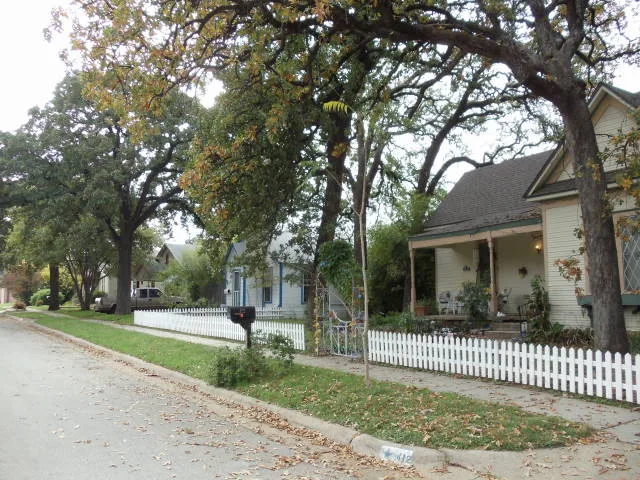
Old Town Historic District is a residential neighborhood of roughly seven blocks on the northern edge of Arlington's original 1876 town plat and several early additions. Its frame and brick houses, most built between about 1890 and about 1950, sit on generous lots shaded by large oak trees. Building types range from L-plan and hall-parlor cottages to Craftsman and Prairie-influenced bungalows, Tudor Revival cottages and modest postwar houses. Garage apartments and outbuildings add to the setting, and the 1938 Kooken School anchors Center Street. The neighborhood grew after rail service arrived in 1876 and interurban service to Dallas and Fort Worth began in 1902, drawing merchants, professionals, farmers, salesmen and wage earners. Subdivisions such as the Fitzhugh and Collins Addition were platted to meet demand. Because suburban development after 1950 reshaped much of the city, this enclave is a rare surviving example of Arlington's early residential character, and it was recognized for its community development and architecture.
Machine-generated summary. This summary was generated by a language model from the official nomination document and has not been reviewed line by line by an editor. It may contain errors. Check the source document before relying on any detail. Source: nomination document (PDF) · catalog entry. Generated October 2026 (model claude-sonnet-5-5, prompt v1.0-2026-10-29).
| Period of significance | c.1890-c.1950 |
|---|---|
| Styles | Late Victorian: Queen Anne; Colonial Revival; Bungalow; Art Moderne; L-plan house; No Style |
| Areas of significance | Community Planning and Development, Architecture |
| Acreage | 38 |
| Boundary source | NPS cultural-resource GIS polygon |
| Full listing page | Old Town Historic District (property record) |
What listing means for this property
This is a historic district. Buildings within its boundary are either contributing (they add to the district's significance) or non-contributing. Owners of contributing income-producing buildings can claim the 20% federal rehabilitation tax credit; homeowners should look at state credits. National Register districts impose no design review by themselves; a local historic district ordinance, if one exists, does (the difference explained).
General information, not legal or tax advice. Rules change; confirm with your State Historic Preservation Office or a qualified adviser.