Nash, Thomas J. and Elizabeth, Farm

The National Park Service has not published a boundary polygon for this district; the map shows the listed properties inside it and the district's reference point.
Why it's listed
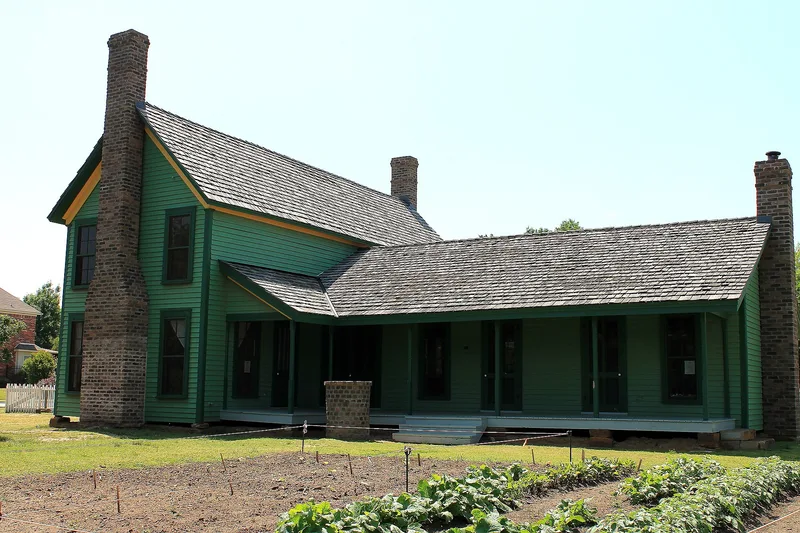
Nash Farm is a 5.2-acre remnant of a North Texas farmstead on the eastern edge of downtown Grapevine, now surrounded by residential streets. The core is a two-story, center-hall I-house built about 1867 with a rear ell, wood clapboard siding and sandstone piers. A transverse crib barn from about 1905, a brick well from about 1910 and a family cemetery from about 1878 also contribute. Thomas J. and Elizabeth Nash arrived from Kentucky and acquired 110 acres in 1859, later expanding to about 295 acres, farming crops and raising livestock until the family sold in 1927. The house was heavily altered around 1950 and later restored. The property is considered significant as a rare surviving 19th-century farmstead in the Dallas-Fort Worth area and as an example of the I-house form. Today the City of Grapevine and the Grapevine Heritage Foundation operate it as a museum, with demonstration crops planted by volunteers.
Machine-generated summary. This summary was generated by a language model from the official nomination document and has not been reviewed line by line by an editor. It may contain errors. Check the source document before relying on any detail. Source: nomination document (PDF) · catalog entry. Generated October 2026 (model claude-sonnet-5-5, prompt v1.0-2026-10-29).
| Period of significance | c.1867-1927 |
|---|---|
| Styles | Other: I-House; No Style |
| Areas of significance | Architecture, Agriculture |
| Acreage | 5.2 |
| Boundary source | not published |
| Full listing page | Nash, Thomas J. and Elizabeth, Farm (property record) |
What listing means for this property
This is a historic district. Buildings within its boundary are either contributing (they add to the district's significance) or non-contributing. Owners of contributing income-producing buildings can claim the 20% federal rehabilitation tax credit; homeowners should look at state credits. National Register districts impose no design review by themselves; a local historic district ordinance, if one exists, does (the difference explained).
General information, not legal or tax advice. Rules change; confirm with your State Historic Preservation Office or a qualified adviser.