Munger Place Historic District

Why it's listed
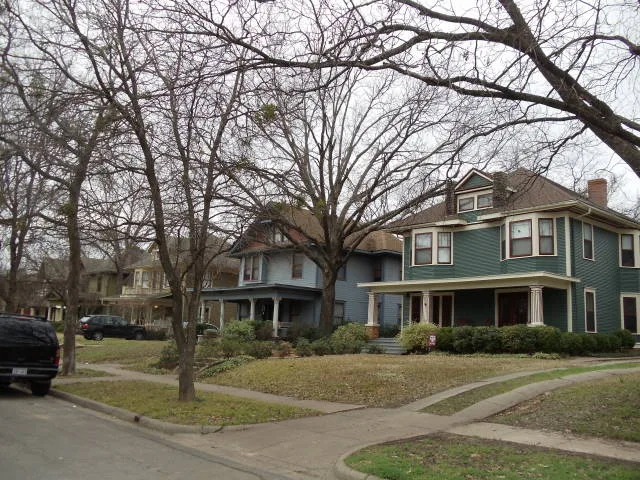
Munger Place is a residential district in Dallas, Texas, laid out in 1905 by R.S. Munger as an elite neighborhood. The nominated portion covers five streets, Junius, Worth, Tremont, Victor and Reiger, across 85 acres and 278 lots. Of these, 207 hold vintage houses, and about 60 percent of the buildings have seen little or no facade alteration. The developers aimed for uniformity: similar lot sizes were grouped together, alleys carried utilities and stables, and trees such as sycamore, pecan and elm lined the streets. Deed restrictions set how far houses sat from the street, required two full stories, barred houses from facing side streets, and set minimum construction costs. The prevailing architecture is Prairie Style, seen in about ninety dwellings, often mixed with Bungaloid features. Tudor Revival, Neo-Classical and Spanish Colonial Revival houses also appear. The district was listed for its planning, its intact landscape concepts and its collection of early twentieth-century houses.
Machine-generated summary. This summary was generated by a language model from the official nomination document and has not been reviewed line by line by an editor. It may contain errors. Check the source document before relying on any detail. Source: nomination document (PDF) · catalog entry. Generated October 2026 (model claude-sonnet-5-5, prompt v1.0-2026-10-29).
| Styles | Predominantly Prairie Style, with Bungaloid elements and some Neo-Classical, Tudor Revival, Spanish Colonial Revival and Eclectic examples |
|---|---|
| Areas of significance | Community Planning and Development, Landscape Architecture, Architecture |
| Acreage | 85 |
| Boundary source | NPS cultural-resource GIS polygon |
| Full listing page | Munger Place Historic District (property record) |
What listing means for this property
This is a historic district. Buildings within its boundary are either contributing (they add to the district's significance) or non-contributing. Owners of contributing income-producing buildings can claim the 20% federal rehabilitation tax credit; homeowners should look at state credits. National Register districts impose no design review by themselves; a local historic district ordinance, if one exists, does (the difference explained).
General information, not legal or tax advice. Rules change; confirm with your State Historic Preservation Office or a qualified adviser.