Michaelis, M.G., Ranch

Why it's listed
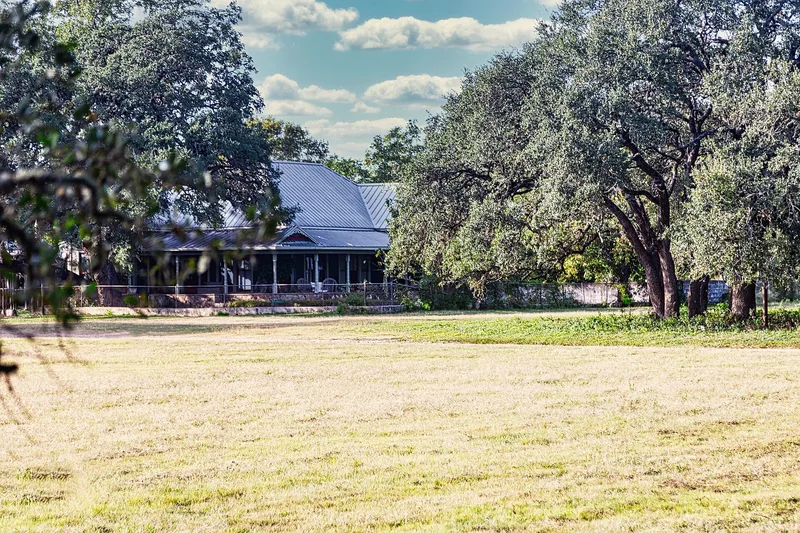
This 288-acre ranch near Kyle in Hays County, Texas, began in 1898 when Max Gustav Michaelis Sr. acquired the land. Its focal point is a one-story Modified L-plan house with Queen Anne detailing, including a wrap-around porch, bay window, patterned shingles and a turreted gazebo. The house was built in 1898 and remodeled in 1902, and descendants of the founder have lived in it ever since. Around it stand stone and frame barns, open sheds, silos, pens, a mule scale, a well and an old gasoline pump, along with dry-stack rock walls and interlocking cedar fences. Michaelis built a large business breeding mules, which were sold to the U.S. military and exported to mines and plantations abroad. After a fire destroyed the great barn in the mid-1930s, smaller barns and sheds replaced it. From 1955 the ranch became known for breeding and exhibiting Charolais cattle. The district counts 27 contributing and 6 noncontributing resources.
Machine-generated summary. This summary was generated by a language model from the official nomination document and has not been reviewed line by line by an editor. It may contain errors. Check the source document before relying on any detail. Source: nomination document (PDF) · catalog entry. Generated October 2026 (model claude-sonnet-5-5, prompt v1.0-2026-10-29).
| Period of significance | 1898-1955 |
|---|---|
| Styles | Late Victorian: Queen Anne; no style |
| Areas of significance | Architecture, Agriculture |
| Acreage | 288 |
| Boundary source | NPS cultural-resource GIS polygon |
| Full listing page | Michaelis, M.G., Ranch (property record) |
What listing means for this property
This is a historic district. Buildings within its boundary are either contributing (they add to the district's significance) or non-contributing. Owners of contributing income-producing buildings can claim the 20% federal rehabilitation tax credit; homeowners should look at state credits. National Register districts impose no design review by themselves; a local historic district ordinance, if one exists, does (the difference explained).
General information, not legal or tax advice. Rules change; confirm with your State Historic Preservation Office or a qualified adviser.