McKinney Homestead

Why it's listed
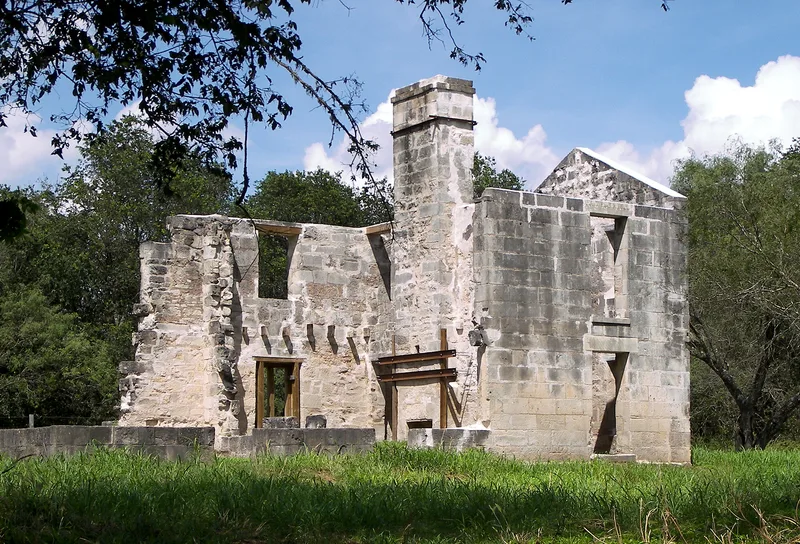
Southwest of Austin, on the north bank of Onion Creek near McKinney Falls, lie the ruins of a mid-nineteenth-century homestead and mill. The district includes a two-story cut-limestone house that burned in the early twentieth century, two stone cisterns south of the house, and the remains of a mill cut into limestone bedrock, with a millrace, dam footings and machinery mounts. Thomas F. McKinney, born in Kentucky in 1801, came to Texas as one of Stephen F. Austin's early colonists. His firm, McKinney and Williams, supplied men, money and ships to the Texas cause during the revolution. He later served in the legislature and moved to Onion Creek around 1850 to 1852, where enslaved labor built his house, stone fences and the area's first flour mill. The Civil War and cotton speculation ruined him. Archeological digs in 1974 revealed intact foundations, a wheel pit with turbine parts, and large unexcavated deposits. The ruins were stabilized in 1976.
Machine-generated summary. This summary was generated by a language model from the official nomination document and has not been reviewed line by line by an editor. It may contain errors. Check the source document before relying on any detail. Source: nomination document (PDF) · catalog entry. Generated October 2026 (model claude-sonnet-5-5, prompt v1.0-2026-10-29).
| Areas of significance | Industry, Commerce, Agriculture, Historic - Non-Aboriginal, Engineering, Black, Politics/Government, Architecture |
|---|---|
| Acreage | 0.9 |
| Boundary source | NPS cultural-resource GIS polygon |
| Full listing page | McKinney Homestead (property record) |
What listing means for this property
This is a historic district. Buildings within its boundary are either contributing (they add to the district's significance) or non-contributing. Owners of contributing income-producing buildings can claim the 20% federal rehabilitation tax credit; homeowners should look at state credits. National Register districts impose no design review by themselves; a local historic district ordinance, if one exists, does (the difference explained).
General information, not legal or tax advice. Rules change; confirm with your State Historic Preservation Office or a qualified adviser.