Mariscal Mine
Why it's listed
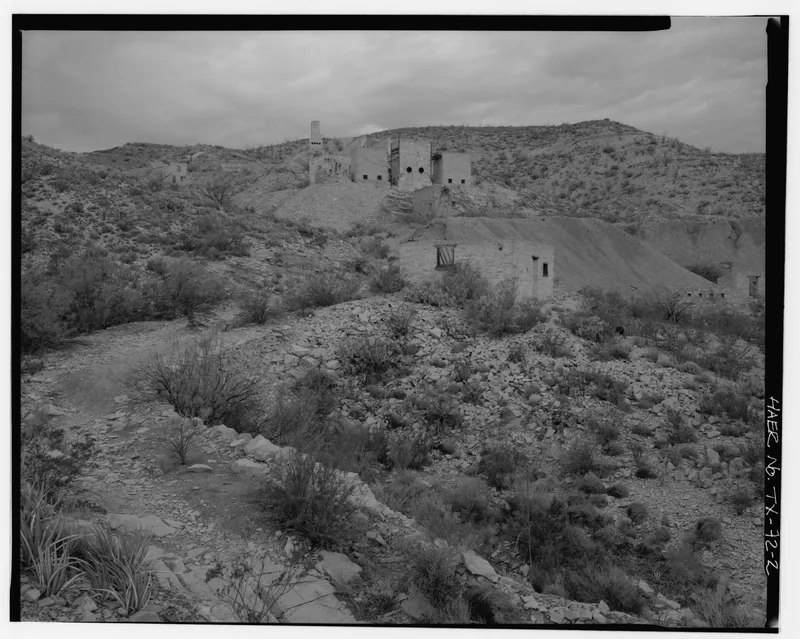
Mariscal Mine is a former quicksilver mining and processing site at the northern end of Mariscal Mountain in Big Bend National Park, Texas. Cinnabar was first found there in 1900. D. E. Lindsey mined it first, and W. K. Ellis added storage bins and a retort. The Mariscal Mining Company bought the property in 1919 and built a larger plant with a 45-ton brick Scott Furnace, concrete condenser chambers, a chimney, a commissary and housing. Workers built twenty or more stone homes themselves. Falling quicksilver prices ended operations in 1923, and a 1942 revival by the Vivianna Mining Company failed in 1944. Today the site is a ruin. Concrete and stone walls remain, while frame and adobe buildings have collapsed and open shafts dot the area. The mine was listed as a representative example of the early cinnabar industry that helped shape the Big Bend region, despite its poor financial results.
Machine-generated summary. This summary was generated by a language model from the official nomination document and has not been reviewed line by line by an editor. It may contain errors. Check the source document before relying on any detail. Source: nomination document (PDF) · catalog entry. Generated October 2026 (model claude-sonnet-5-5, prompt v1.0-2026-10-29).
| Period of significance | 1900-1944 |
|---|---|
| Areas of significance | Industry |
| Acreage | 640 |
| Boundary source | NPS cultural-resource GIS polygon |
| Full listing page | Mariscal Mine (property record) |
What listing means for this property
This is a historic district. Buildings within its boundary are either contributing (they add to the district's significance) or non-contributing. Owners of contributing income-producing buildings can claim the 20% federal rehabilitation tax credit; homeowners should look at state credits. National Register districts impose no design review by themselves; a local historic district ordinance, if one exists, does (the difference explained).
Noted as vacant in the nomination. Nomination documents can be decades old; current status may differ. If you are considering buying an empty listed property, read the due-diligence checklist.
General information, not legal or tax advice. Rules change; confirm with your State Historic Preservation Office or a qualified adviser.