King's Highway Historic District

Why it's listed
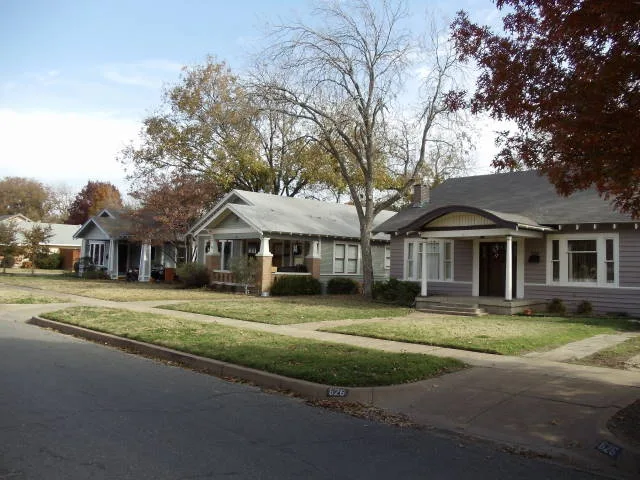
King's Highway is a six-block residential street in the Oak Cliff area of Dallas that runs diagonally across the surrounding street grid. The district covers about 30 acres and includes 100 properties, 65 of them contributing. Most are brick or wood-frame bungalows, four-square houses and small four-to-eight-unit apartment buildings dating from about 1920 through the 1930s, with Craftsman, Prairie School and period revival details. The street was part of the Oak Cliff Annex, platted in 1909 and slow to develop until the 1920s. Buildings here were larger than elsewhere in the Annex, and the lower southeast end held many apartments and duplexes while the northwest end had mostly single-family houses. Consistent setbacks, compatible materials and the unusual diagonal layout give the street a cohesive character. It was listed for its architecture, with a period of significance from about 1920 to 1944. Some alterations have occurred, but rehabilitation is returning many houses to single-family use.
Machine-generated summary. This summary was generated by a language model from the official nomination document and has not been reviewed line by line by an editor. It may contain errors. Check the source document before relying on any detail. Source: nomination document (PDF) · catalog entry. Generated October 2026 (model claude-sonnet-5-5, prompt v1.0-2026-10-29).
| Period of significance | c.1920-1944 |
|---|---|
| Styles | Late 19th and Early 20th Century American Movements: Bungalow; also four-square and one-part commercial block |
| Areas of significance | Architecture |
| Acreage | 30 |
| Boundary source | NPS cultural-resource GIS polygon |
| Full listing page | King's Highway Historic District (property record) |
What listing means for this property
This is a historic district. Buildings within its boundary are either contributing (they add to the district's significance) or non-contributing. Owners of contributing income-producing buildings can claim the 20% federal rehabilitation tax credit; homeowners should look at state credits. National Register districts impose no design review by themselves; a local historic district ordinance, if one exists, does (the difference explained).
General information, not legal or tax advice. Rules change; confirm with your State Historic Preservation Office or a qualified adviser.