King Ranch

The National Park Service has not published a boundary polygon for this district; the map shows the listed properties inside it and the district's reference point.
Why it's listed
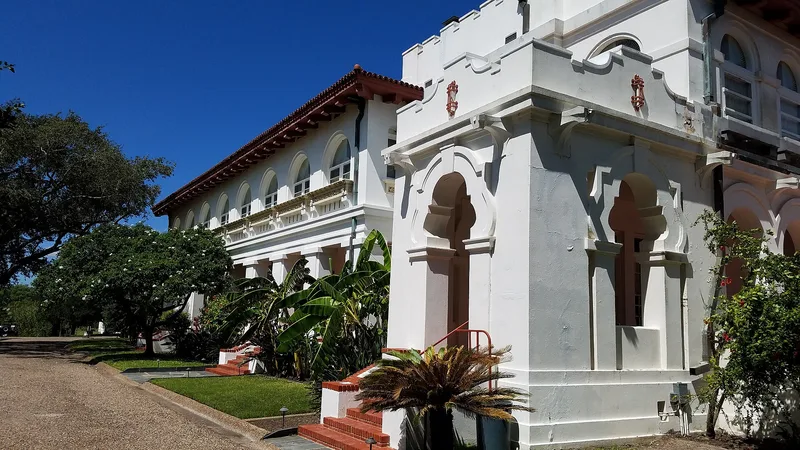
King Ranch is a vast cattle operation in south Texas, covering parts of Nueces, Kenedy, Kleberg and Willacy Counties, with its business offices in Kingsville. Richard King founded it in 1852 by buying a 75,000-acre Spanish land grant on Santa Gertrudis Creek. After a partnership with Mifflin Kenedy from 1860 to 1868, the ranch passed through Robert J. Kleberg and his son, and later to King Ranch, Inc. Its herd began with Longhorns from Mexico, and Shorthorns and Herefords were added from 1893. Brahma cattle bred with Shorthorns produced the Santa Gertrudis breed. By the mid-20th century the ranch held about 1,225,000 acres, making it the largest in the country. The original headquarters area lies two miles west of Kingsville. The first ranch house burned in 1911, and the present white brick mansion and most nearby structures date from 1912. The 19th-century commissary survives. The ranch remains a working business in private ownership and has a marked loop tour for visitors.
Machine-generated summary. This summary was generated by a language model from the official nomination document and has not been reviewed line by line by an editor. It may contain errors. Check the source document before relying on any detail. Source: nomination document (PDF) · catalog entry. Generated October 2026 (model claude-sonnet-5-5, prompt v1.0-2026-10-29).
| Areas of significance | Agriculture, Exploration/Settlement |
|---|---|
| Acreage | 1225000 |
| Boundary source | not published |
| Full listing page | King Ranch (property record) |
What listing means for this property
This is a historic district. Buildings within its boundary are either contributing (they add to the district's significance) or non-contributing. Owners of contributing income-producing buildings can claim the 20% federal rehabilitation tax credit; homeowners should look at state credits. National Register districts impose no design review by themselves; a local historic district ordinance, if one exists, does (the difference explained).
General information, not legal or tax advice. Rules change; confirm with your State Historic Preservation Office or a qualified adviser.