Kessler Park Historic District

Why it's listed
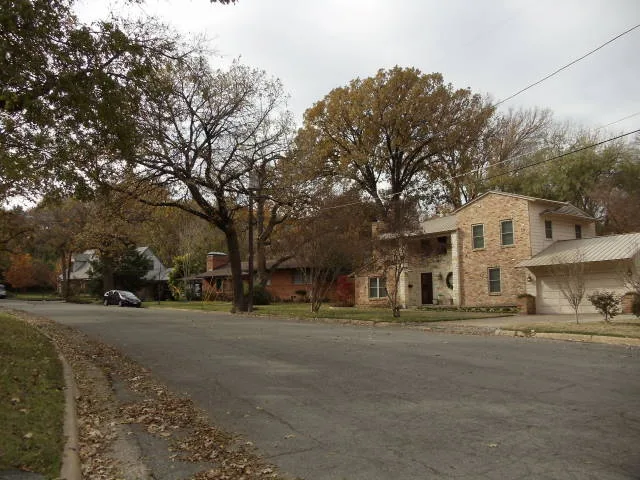
Kessler Park is a large residential district of about 275 acres roughly three miles west-southwest of downtown Dallas, forming the northern anchor of the Oak Cliff community. It combines four additions platted in the 1920s with the Stevens Park golf course, which covers over a third of the area. Modest revival-style cottages and bungalows fill the flat southern and eastern portions, laid out on regular blocks with alleys. North of Colorado Boulevard, two hilly additions have curving streets, irregular lots and larger, often architect-designed houses of one and a half or two stories in brick, stone and stucco. Tudor Revival and Spanish Colonial Revival dominate, with Classical and Georgian Revival examples and fewer Craftsman bungalows. Of 558 resources, 413 contribute to the district's character. Its significance rests on the consistent site planning, stylistic kinship and high integrity of its 1920s to 1940s buildings, along with the landscaped park setting. Few primary buildings have been lost, apart from those removed when Tyler Avenue was widened in the 1950s.
Machine-generated summary. This summary was generated by a language model from the official nomination document and has not been reviewed line by line by an editor. It may contain errors. Check the source document before relying on any detail. Source: nomination document (PDF) · catalog entry. Generated October 2026 (model claude-sonnet-5-5, prompt v1.0-2026-10-29).
| Styles | Tudor Revival; Spanish Colonial Revival; Bungalow/Craftsman (also Classical Revival, Georgian Revival and some Prairie School influence) |
|---|---|
| Areas of significance | Architecture |
| Acreage | 275 |
| Boundary source | NPS cultural-resource GIS polygon |
| Full listing page | Kessler Park Historic District (property record) |
What listing means for this property
This is a historic district. Buildings within its boundary are either contributing (they add to the district's significance) or non-contributing. Owners of contributing income-producing buildings can claim the 20% federal rehabilitation tax credit; homeowners should look at state credits. National Register districts impose no design review by themselves; a local historic district ordinance, if one exists, does (the difference explained).
General information, not legal or tax advice. Rules change; confirm with your State Historic Preservation Office or a qualified adviser.