Jefferson Historic District

Why it's listed
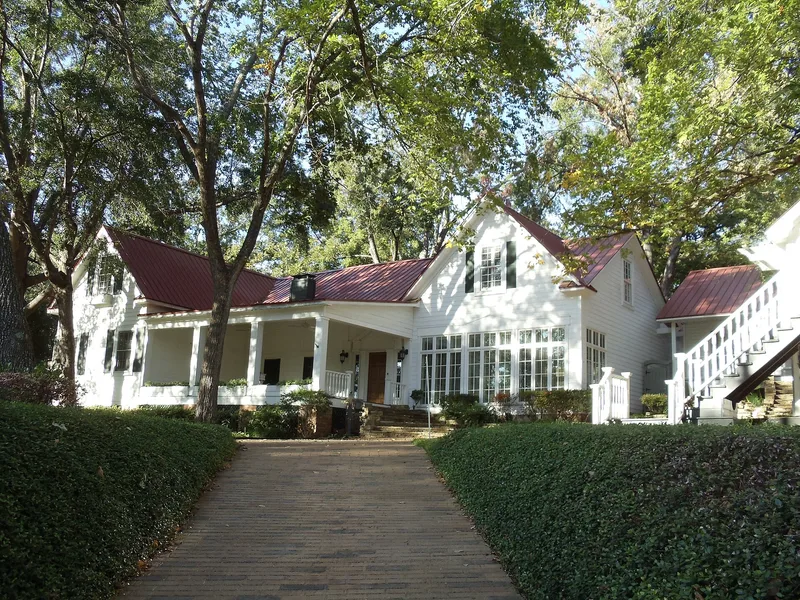
Jefferson, in far northeast Texas, is a district of about 107 acres on a horseshoe bend of Big Cypress Bayou. It was once the second largest immigration port in Texas, where steamboats unloaded settlers and goods bound for the western interior. The district holds 56 buildings of state significance, and the town's appearance from about 1880 survives almost intact. Most houses are symmetrical one-story white frame buildings with front porches and doors with sidelights and transoms, in the Greek Revival manner that builders kept using after the Civil War. Notable examples include the Presbyterian Manse, begun in 1839, the Italianate House of the Seasons, the Sedberry House and the Excelsior House hotel, which has a late 1850s core and an 1872 wing. Brick commercial buildings stand near the bayou, where wharf foundations remain. River trade declined after the war, and restoration work began in 1941, leaving a well-preserved nineteenth-century town.
Machine-generated summary. This summary was generated by a language model from the official nomination document and has not been reviewed line by line by an editor. It may contain errors. Check the source document before relying on any detail. Source: nomination document (PDF) · catalog entry. Generated October 2026 (model claude-sonnet-5-5, prompt v1.0-2026-10-29).
| Period of significance | 19th Century |
|---|---|
| Styles | Late Greek Revival, with transitional Victorian, Italianate and Romanesque Revival examples |
| Areas of significance | Commerce, Architecture |
| Acreage | 107 |
| Boundary source | NPS cultural-resource GIS polygon |
| Full listing page | Jefferson Historic District (property record) |
What listing means for this property
This is a historic district. Buildings within its boundary are either contributing (they add to the district's significance) or non-contributing. Owners of contributing income-producing buildings can claim the 20% federal rehabilitation tax credit; homeowners should look at state credits. National Register districts impose no design review by themselves; a local historic district ordinance, if one exists, does (the difference explained).
General information, not legal or tax advice. Rules change; confirm with your State Historic Preservation Office or a qualified adviser.