Hutto Commercial Historic District

The National Park Service has not published a boundary polygon for this district; the map shows the listed properties inside it and the district's reference point.
Why it's listed
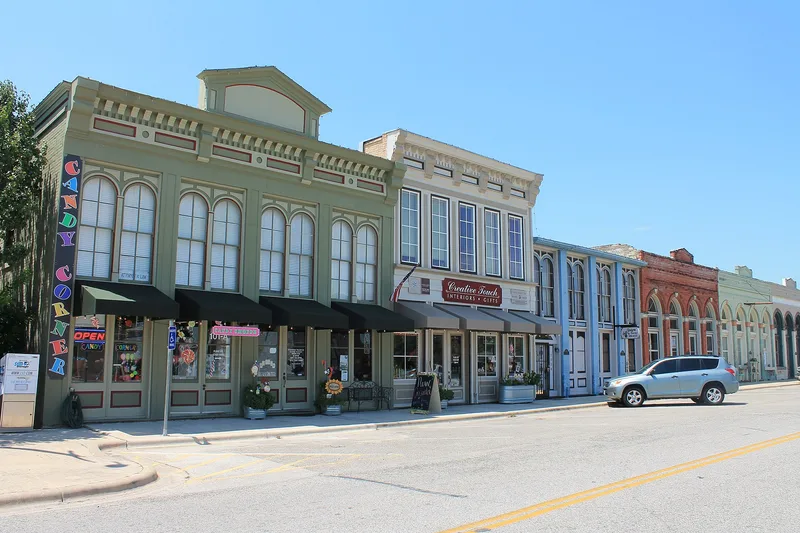
Twelve brick commercial buildings on and near East Street make up the commercial core of Hutto, Texas, about 27 miles northeast of Austin. The first two, built in 1892 at the corner of East and Front streets, are two-part blocks with cast iron facades and elaborate Italianate cornices. Seven more followed in 1893, including a row of five identical one-part blocks with arched fronts and limestone keystones. A 1908 former bank with Spanish Revival character and an L-shaped 1914 building completed the group. Developers A.W. Carpenter and William M. Woolsey started the district after a tornado destroyed the earlier business area south of the railroad tracks. The buildings housed general stores, a bank, hardware and drug stores, and later a post office. Ten buildings contribute to the district's character and two have been heavily altered. The opposite side of East Street lost most of its historic buildings to a fire in 1901 and later demolition, leaving the west side as the intact remnant of the town's early commerce.
Machine-generated summary. This summary was generated by a language model from the official nomination document and has not been reviewed line by line by an editor. It may contain errors. Check the source document before relying on any detail. Source: nomination document (PDF) · catalog entry. Generated October 2026 (model claude-sonnet-5-5, prompt v1.0-2026-10-29).
| Styles | Late Victorian: Italianate; 1-part commercial block; 2-part commercial block |
|---|---|
| Areas of significance | Architecture, Commerce |
| Acreage | 1.2 |
| Boundary source | not published |
| Full listing page | Hutto Commercial Historic District (property record) |
What listing means for this property
This is a historic district. Buildings within its boundary are either contributing (they add to the district's significance) or non-contributing. Owners of contributing income-producing buildings can claim the 20% federal rehabilitation tax credit; homeowners should look at state credits. National Register districts impose no design review by themselves; a local historic district ordinance, if one exists, does (the difference explained).
General information, not legal or tax advice. Rules change; confirm with your State Historic Preservation Office or a qualified adviser.