Holden Properties Historic District

The National Park Service has not published a boundary polygon for this district; the map shows the listed properties inside it and the district's reference point.
Why it's listed
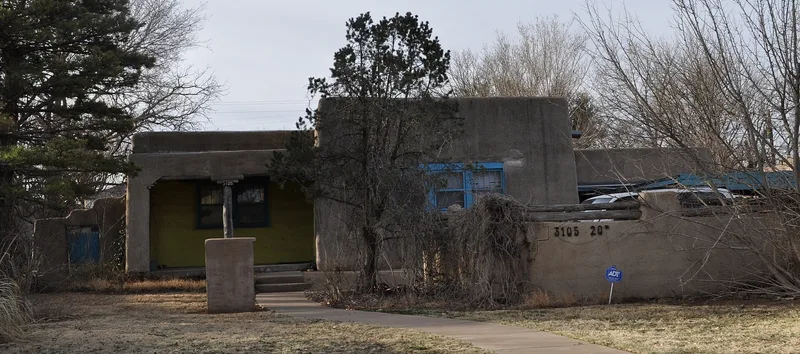
Adobe Row is a cluster of Pueblo Revival homes and apartments on 20th Street in Lubbock, two blocks south of the Texas Tech University campus. Built between 1930 and the early 1970s, the seven buildings share adobe walls, flat roofs with parapets, exposed vigas, rounded corners, and turquoise-blue trim. Two large houses, Casa Grande and Casa del Gallo y Sirena, anchor the group, with smaller apartments and a workshop around them. A seven-foot adobe wall with gates links the properties and creates private courtyards. Adobe was used in every building before 1962, after which pumice concrete block was substituted for additions. The complex was developed by Dr. William Curry Holden, who joined the Texas Tech faculty in 1929 and taught history and anthropology there for four decades. He led archeological field schools and expeditions across Texas, New Mexico, and Mexico. Five of the seven buildings, along with the walls and a well, contribute to the district, which remains largely intact and in residential use.
Machine-generated summary. This summary was generated by a language model from the official nomination document and has not been reviewed line by line by an editor. It may contain errors. Check the source document before relying on any detail. Source: nomination document (PDF) · catalog entry. Generated October 2026 (model claude-sonnet-5-5, prompt v1.0-2026-10-29).
| Styles | Late 19th and Early 20th Century Revivals: Pueblo Revival |
|---|---|
| Areas of significance | Architecture, Education |
| Acreage | 0.9 |
| Boundary source | not published |
| Full listing page | Holden Properties Historic District (property record) |
What listing means for this property
This is a historic district. Buildings within its boundary are either contributing (they add to the district's significance) or non-contributing. Owners of contributing income-producing buildings can claim the 20% federal rehabilitation tax credit; homeowners should look at state credits. National Register districts impose no design review by themselves; a local historic district ordinance, if one exists, does (the difference explained).
General information, not legal or tax advice. Rules change; confirm with your State Historic Preservation Office or a qualified adviser.