Herff-Rozelle Farm

Why it's listed
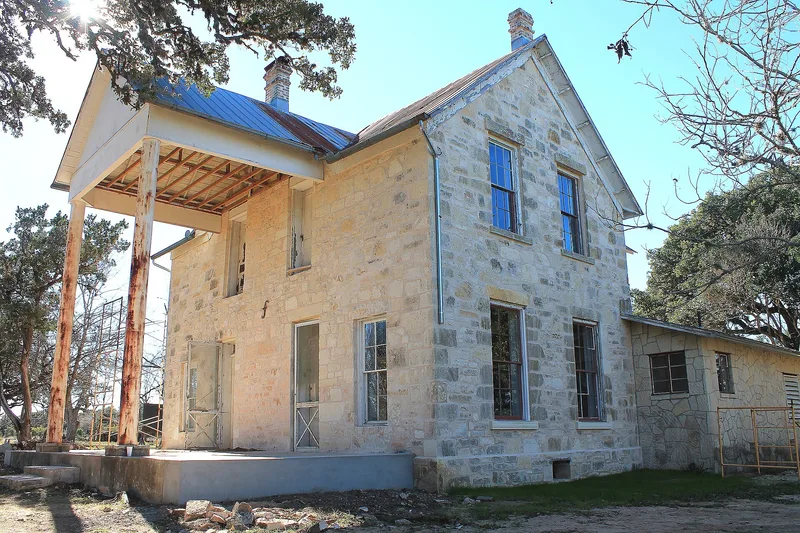
Herff-Rozelle Farm occupies 56.5 acres on the eastern outskirts of Boerne, where Cibolo and Menger creeks meet. Pioneer physician Ferdinand Herff bought the land in 1852 as part of a 320-acre tract, and he and his wife Mathilde built a two-story cut limestone house there in 1883 after an earlier house burned. The family used the farm as a summer retreat, and Herff's son Charles lived and farmed there until the property was sold in 1935 to George and Erma Rozelle, who kept sheep and dairy cows and planted orchards. Farming continued into the 1980s. Sixteen contributing resources survive, including the house, a barn, smokehouse, aviary, workers' quarters, outhouse, windmill, water tower and tank. Pastures still stretch from Herff Road to the creeks, in an area now crowded by subdivisions and commercial development. The property was listed for its agricultural history, its connection to Ferdinand Herff, and its vernacular architecture.
Machine-generated summary. This summary was generated by a language model from the official nomination document and has not been reviewed line by line by an editor. It may contain errors. Check the source document before relying on any detail. Source: nomination document (PDF) · catalog entry. Generated October 2026 (model claude-sonnet-5-5, prompt v1.0-2026-10-29).
| Period of significance | 1883-1959 |
|---|---|
| Styles | Late 19th & Early 20th Century Revivals / Classical Revival |
| Areas of significance | Agriculture, Architecture |
| Acreage | 56.5 |
| Boundary source | NPS cultural-resource GIS polygon |
| Full listing page | Herff-Rozelle Farm (property record) |
What listing means for this property
This is a historic district. Buildings within its boundary are either contributing (they add to the district's significance) or non-contributing. Owners of contributing income-producing buildings can claim the 20% federal rehabilitation tax credit; homeowners should look at state credits. National Register districts impose no design review by themselves; a local historic district ordinance, if one exists, does (the difference explained).
General information, not legal or tax advice. Rules change; confirm with your State Historic Preservation Office or a qualified adviser.