Grapevine Commercial Historic District (Boundary Increase)

Why it's listed
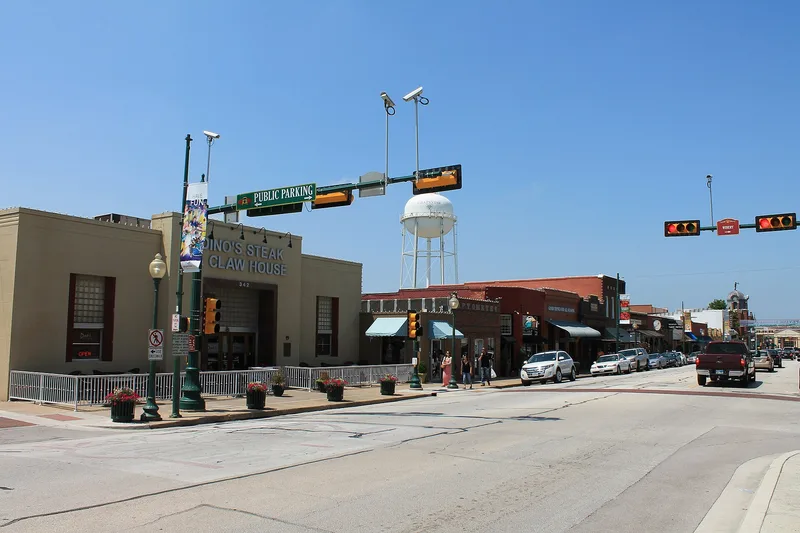
Two rows of brick storefronts on the east and west sides of South Main Street in Grapevine, Texas, form an extension of the town's existing commercial historic district. The nominated area covers the 300 and 400 blocks and includes 27 buildings and one structure, built mainly between 1880 and 1930 with a few from the 1940s. Most are 1- or 2-part commercial blocks of locally fired brick, with corbelled cornices, three-bay storefronts and transoms. Fifteen resources retain enough integrity to contribute. The district reflects Grapevine's growth as a regional trade center supported by cotton, truck farming and the Cotton Belt Railroad, which arrived in 1887. Banks, groceries, theaters and other businesses filled Main Street over the following decades. Buckner's Cash Grocery of 1930 and the 1942 First National Bank, built in the Art Moderne style, illustrate later phases. Recent restoration of storefront facades prompted the nomination, which recognizes the area at the local level for commerce and architecture, with a period of significance of c. 1889 to 1947.
Machine-generated summary. This summary was generated by a language model from the official nomination document and has not been reviewed line by line by an editor. It may contain errors. Check the source document before relying on any detail. Source: nomination document (PDF) · catalog entry. Generated October 2026 (model claude-sonnet-5-5, prompt v1.0-2026-10-29).
| Period of significance | c. 1889-1947 |
|---|---|
| Styles | Other: 1-part commercial block; Other: 2-part commercial block (some 1940s vernacular Art Moderne) |
| Areas of significance | Architecture, Commerce |
| Acreage | 7 |
| Boundary source | NPS cultural-resource GIS polygon |
| Full listing page | Grapevine Commercial Historic District (Boundary Increase) (property record) |
What listing means for this property
This is a historic district. Buildings within its boundary are either contributing (they add to the district's significance) or non-contributing. Owners of contributing income-producing buildings can claim the 20% federal rehabilitation tax credit; homeowners should look at state credits. National Register districts impose no design review by themselves; a local historic district ordinance, if one exists, does (the difference explained).
General information, not legal or tax advice. Rules change; confirm with your State Historic Preservation Office or a qualified adviser.