Grand Avenue Historic District

Why it's listed
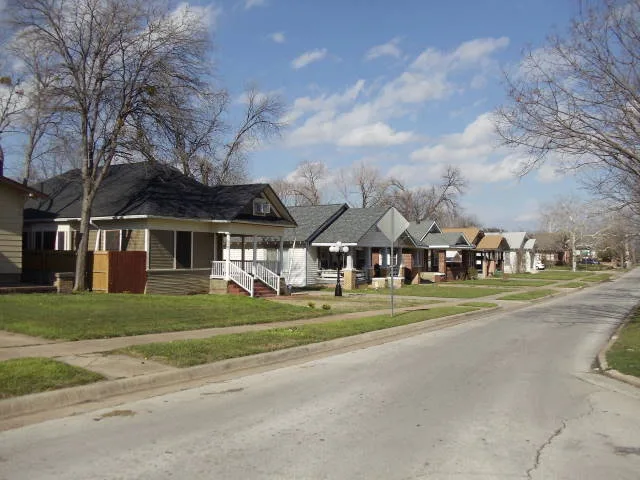
Grand Avenue curves along a bluff above the West Fork of the Trinity River on Fort Worth's near north side, and about 88 primary buildings line it over seven blocks. Most are modest single-family houses built between 1906 and 1925 in bungalow or four-square form, with Arts and Crafts, Prairie School and Tudor Revival touches. Highlights include the 1904 Armstrong House, with Queen Anne character, and the brick Ross House of 1917 at the north end. The street is the main surviving piece of landscape architect Nathan Barrett's 1888 plan for North Fort Worth, a suburb that grew slowly until the Swift and Armour packing plants opened in 1902. Middle managers, small businessmen and professionals then built homes here, taking advantage of the views. About 65 percent of the buildings still contribute to the district's character. The collection was listed for its role in the city's growth and for its planning and architecture.
Machine-generated summary. This summary was generated by a language model from the official nomination document and has not been reviewed line by line by an editor. It may contain errors. Check the source document before relying on any detail. Source: nomination document (PDF) · catalog entry. Generated October 2026 (model claude-sonnet-5-5, prompt v1.0-2026-10-29).
| Period of significance | 1902-1925 |
|---|---|
| Styles | Bungalow/Craftsman; Tudor Revival; Prairie School |
| Areas of significance | Community Planning and Development, Architecture |
| Acreage | 42 |
| Boundary source | NPS cultural-resource GIS polygon |
| Full listing page | Grand Avenue Historic District (property record) |
What listing means for this property
This is a historic district. Buildings within its boundary are either contributing (they add to the district's significance) or non-contributing. Owners of contributing income-producing buildings can claim the 20% federal rehabilitation tax credit; homeowners should look at state credits. National Register districts impose no design review by themselves; a local historic district ordinance, if one exists, does (the difference explained).
General information, not legal or tax advice. Rules change; confirm with your State Historic Preservation Office or a qualified adviser.