Fort Worth Stockyards Historic District

Why it's listed
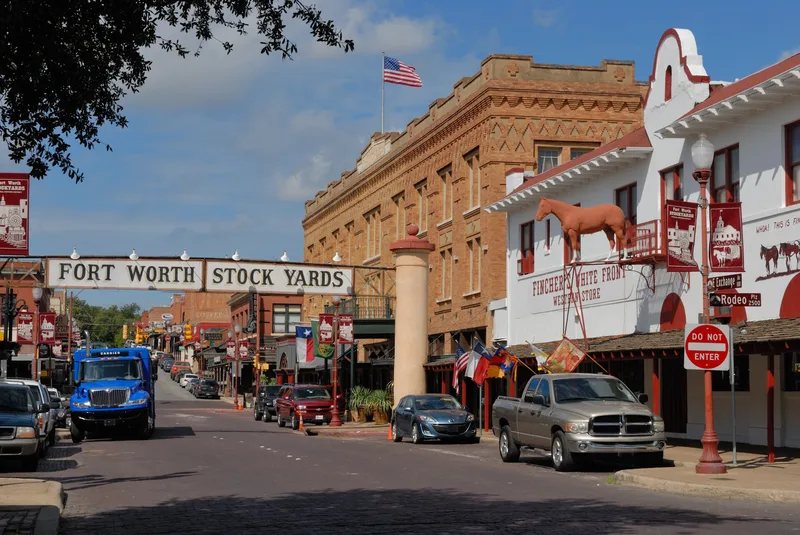
Fort Worth Stockyards Historic District covers about 98 acres north of downtown Fort Worth. Its nucleus is the stockyards begun in 1890, later joined by the Armour and Swift packing plants, which opened in 1903. The district includes the stock pens, the 1902 Live Stock Exchange Building in Mission style, the 1908 Coliseum, the Horse and Mule Barns rebuilt in the late 1920s, the Old Stockyards Bank, and blocks of early twentieth-century hotels, saloons and shops along Exchange Avenue and North Main Street. The packing district was laid out as Niles City in 1898 and annexed by Fort Worth in 1922. The nomination presents the stockyards as the city's first industry and the main driver of its growth, with the yards serving as the southwest's leading livestock market from about 1900 into the late 1950s. By the time of listing, the Armour building had been razed and the Swift building was being demolished, while public grants and a private developer were funding restoration of the Coliseum and nearby buildings.
Machine-generated summary. This summary was generated by a language model from the official nomination document and has not been reviewed line by line by an editor. It may contain errors. Check the source document before relying on any detail. Source: nomination document (PDF). Generated October 2026 (model claude-sonnet-5-5, prompt v1.0-2026-10-29).
| Styles | Mission style predominates among the principal buildings (Live Stock Exchange, Horse and Mule Barns, Old Stockyards Bank) |
|---|---|
| Areas of significance | Industry, Commerce, Agriculture, Architecture |
| Acreage | 98 |
| Boundary source | NPS cultural-resource GIS polygon |
| Full listing page | Fort Worth Stockyards Historic District (property record) |
What listing means for this property
This is a historic district. Buildings within its boundary are either contributing (they add to the district's significance) or non-contributing. Owners of contributing income-producing buildings can claim the 20% federal rehabilitation tax credit; homeowners should look at state credits. National Register districts impose no design review by themselves; a local historic district ordinance, if one exists, does (the difference explained).
General information, not legal or tax advice. Rules change; confirm with your State Historic Preservation Office or a qualified adviser.