Fort Worth Botanic Garden

The National Park Service has not published a boundary polygon for this district; the map shows the listed properties inside it and the district's reference point.
Why it's listed
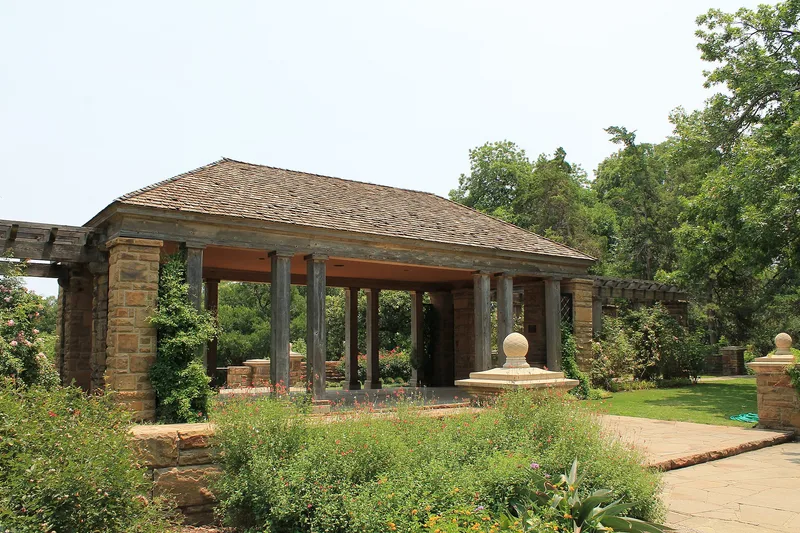
Fort Worth Botanic Garden's historic core is a 33-acre district just north of Interstate 30 in west Fort Worth. It grew from Rock Springs Park, bought in 1912 and improved from 1929 under City Forester Raymond C. Morrison, with designs by the Kansas City firm Hare and Hare. The centerpiece is the Municipal Rose Garden of 1933, built by laborers hired through a federal relief program. Reddish-brown Palo Pinto sandstone and flagstone appear throughout. A hipped-roof overlook shelter leads down a rose ramp with a water cascade to formal parterres, a large pond, a colonnade and an oval rose garden with a gazebo. South of it, the informal Rock Springs area has winding flagstone trails, small waterfalls and lagoons. Highway construction in the early 1950s destroyed a lagoon and dried the springs, and a pump now moves the water. A small stone shelter cut off by the realignment of University Drive is included, making the district discontiguous. The district counts 20 contributing resources.
Machine-generated summary. This summary was generated by a language model from the official nomination document and has not been reviewed line by line by an editor. It may contain errors. Check the source document before relying on any detail. Source: nomination document (PDF) · catalog entry. Generated October 2026 (model claude-sonnet-5-5, prompt v1.0-2026-10-29).
| Styles | Other / landscape; 20th Century Revivals / Italian Renaissance, French Renaissance |
|---|---|
| Areas of significance | Landscape Architecture, Entertainment/Recreation |
| Acreage | 33 |
| Boundary source | not published |
| Full listing page | Fort Worth Botanic Garden (property record) |
What listing means for this property
This is a historic district. Buildings within its boundary are either contributing (they add to the district's significance) or non-contributing. Owners of contributing income-producing buildings can claim the 20% federal rehabilitation tax credit; homeowners should look at state credits. National Register districts impose no design review by themselves; a local historic district ordinance, if one exists, does (the difference explained).
General information, not legal or tax advice. Rules change; confirm with your State Historic Preservation Office or a qualified adviser.