Fort McKavett Historic District

Why it's listed
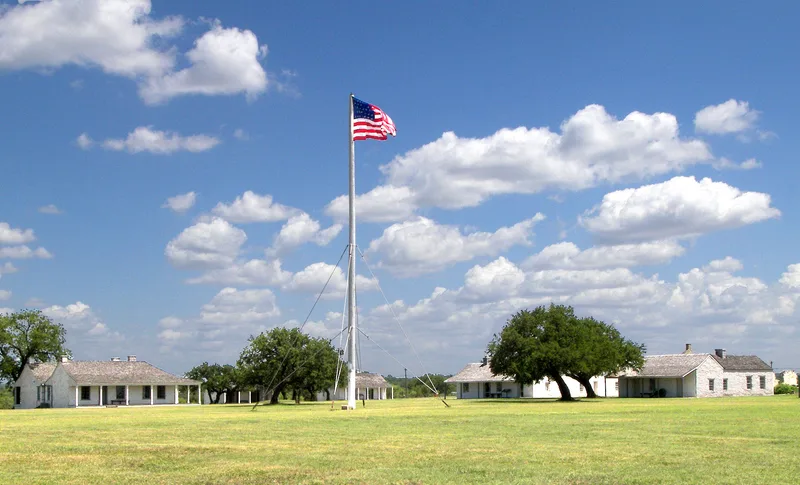
Fort McKavett is a former frontier army post on a limestone promontory above the San Saba River in Menard County, Texas. Founded in 1852 as Camp San Saba, it protected settlers from raids and guarded the Upper Road to California. Soldiers built its stone buildings during two periods of occupation, 1852-1859 and 1868-1883. After the Civil War, the fort was rebuilt from 1869 by men of the 41st Infantry and the 9th Cavalry, Black regiments including the Buffalo soldiers, under Ranald MacKenzie. Troops from the post helped remove Indians from the southern plains and took part in the Victorio War of 1878-81. When the army left in 1883, the land returned to private owners, and the fort buildings became the heart of today's town. The hospital compound and schoolhouse are well preserved, several barracks and other structures survive as roofed buildings or ruins, and many buildings remain in use as homes.
Machine-generated summary. This summary was generated by a language model from the official nomination document and has not been reviewed line by line by an editor. It may contain errors. Check the source document before relying on any detail. Source: nomination document (PDF) · catalog entry. Generated October 2026 (model claude-sonnet-5-5, prompt v1.0-2026-10-29).
| Period of significance | 1852-1859, 1868-1883 |
|---|---|
| Areas of significance | Military |
| Acreage | 140 |
| Boundary source | NPS cultural-resource GIS polygon |
| Full listing page | Fort McKavett Historic District (property record) |
What listing means for this property
This is a historic district. Buildings within its boundary are either contributing (they add to the district's significance) or non-contributing. Owners of contributing income-producing buildings can claim the 20% federal rehabilitation tax credit; homeowners should look at state credits. National Register districts impose no design review by themselves; a local historic district ordinance, if one exists, does (the difference explained).
General information, not legal or tax advice. Rules change; confirm with your State Historic Preservation Office or a qualified adviser.