Fort McIntosh

Why it's listed
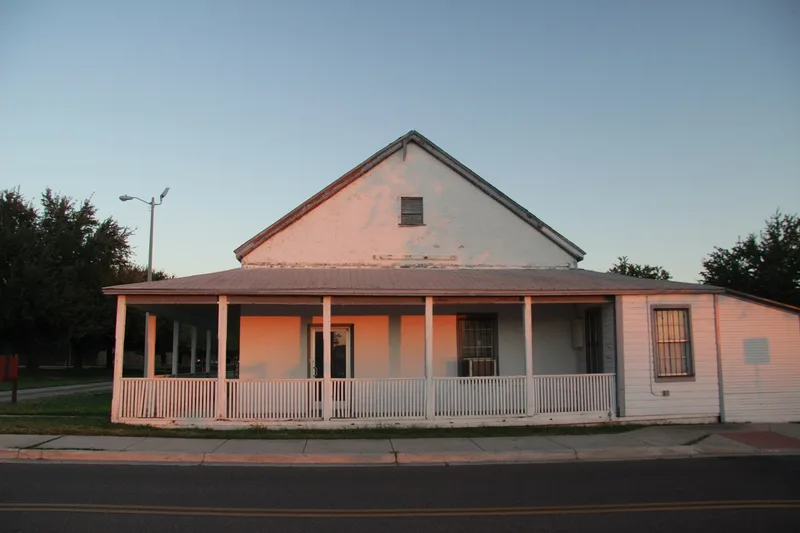
Fort McIntosh is a military post district on a bluff above the Rio Grande in Laredo, Texas. The Army occupied the site from 1849 until 1947, and work on a star-shaped earthen fort began in December 1853. Ruins of that fort remain, along with a stone magazine and a 1930s WPA wall that now marks the district boundary. Surviving buildings from the 1870s to 1890s include the quartermaster's storehouse, the commissary, non-commissioned staff quarters, Victorian-detailed officers' quarters, one of three 1880 barracks, a chapel, a guardhouse and the 1885 post hospital. The fort guarded the Mexican frontier, saw Union, Confederate and later Army garrisons, and in 1911 was the starting point of a cross-country test flight of a Wright Type B airplane to Eagle Pass. After the fort closed, the land passed to Laredo Junior College, which uses many of the buildings and has built new classrooms on the former parade ground.
Machine-generated summary. This summary was generated by a language model from the official nomination document and has not been reviewed line by line by an editor. It may contain errors. Check the source document before relying on any detail. Source: nomination document (PDF) · catalog entry. Generated October 2026 (model claude-sonnet-5-5, prompt v1.0-2026-10-29).
| Period of significance | 1800-1899 |
|---|---|
| Areas of significance | Military, Transportation, Architecture |
| Acreage | 193.8 |
| Boundary source | NPS cultural-resource GIS polygon |
| Full listing page | Fort McIntosh (property record) |
What listing means for this property
This is a historic district. Buildings within its boundary are either contributing (they add to the district's significance) or non-contributing. Owners of contributing income-producing buildings can claim the 20% federal rehabilitation tax credit; homeowners should look at state credits. National Register districts impose no design review by themselves; a local historic district ordinance, if one exists, does (the difference explained).
General information, not legal or tax advice. Rules change; confirm with your State Historic Preservation Office or a qualified adviser.