Ennis Commercial Historic District (Boundary Increase)

The National Park Service has not published a boundary polygon for this district; the map shows the listed properties inside it and the district's reference point.
Why it's listed
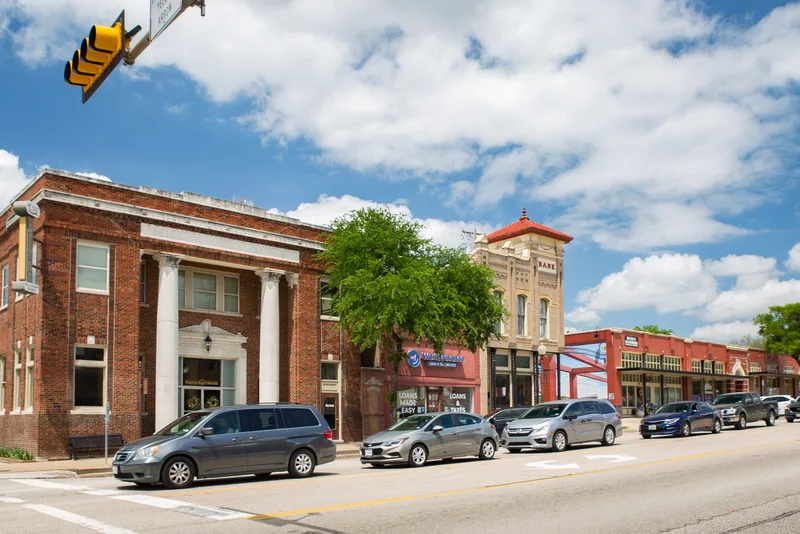
Downtown Ennis, Texas, is a compact commercial district of about 13 acres, made up of seven city blocks and a strip of railroad property. Its one- to three-story brick buildings form nearly continuous street walls along West Knox, West Ennis, Dallas and Main streets. The street grid was laid out by Houston and Texas Central Railroad engineer Theo Kosse and remains largely intact, oriented to the tracks. After a fire in 1875, the commercial center was rebuilt on the west side of the tracks, mostly in brick. Most buildings date from the early twentieth century and reflect prosperity from the railroad and cotton. Ennis became a rail station in 1871, and the 1891 relocation of the railroad's northern division headquarters spurred major growth. Local designer Hix McCanless is linked to nine buildings, including the Knights of Pythias Building and the Masonic Lodge. Of 82 structures, 53 contribute to the district's historic character. The district is listed for its architecture and its role in the commerce of the town.
Machine-generated summary. This summary was generated by a language model from the official nomination document and has not been reviewed line by line by an editor. It may contain errors. Check the source document before relying on any detail. Source: nomination document (PDF). Generated October 2026 (model claude-sonnet-5-5, prompt v1.0-2026-10-29).
| Period of significance | 1800-1899; 1900-1935 |
|---|---|
| Areas of significance | Commerce, Architecture |
| Acreage | 3 |
| Boundary source | not published |
| Full listing page | Ennis Commercial Historic District (Boundary Increase) (property record) |
What listing means for this property
This is a historic district. Buildings within its boundary are either contributing (they add to the district's significance) or non-contributing. Owners of contributing income-producing buildings can claim the 20% federal rehabilitation tax credit; homeowners should look at state credits. National Register districts impose no design review by themselves; a local historic district ordinance, if one exists, does (the difference explained).
General information, not legal or tax advice. Rules change; confirm with your State Historic Preservation Office or a qualified adviser.