Ennis Commercial Historic District

Why it's listed
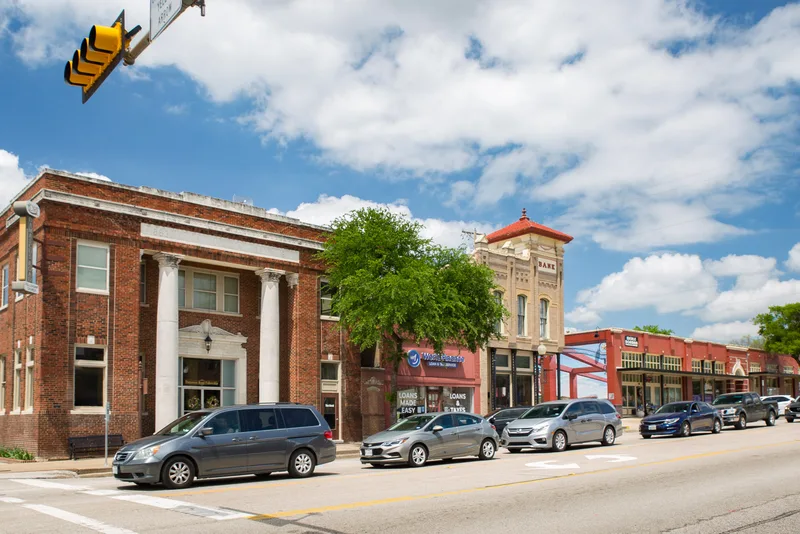
Downtown Ennis, Texas, is a 13-acre commercial district of one- to three-story brick buildings laid out on a grid planned by Houston and Texas Central Railroad engineer Theo Kosse. After a fire in 1875, the business area was rebuilt on the west side of the tracks, and later construction was almost entirely brick. Brick streets and reddish brick sidewalk pavers add to the unified look. The district grew with the railroad, which established the town in 1871 and moved its northern division headquarters there in 1891, and with expanding cotton production. Of 82 structures, 53 contribute to its historic character, most built between 1890 and the late 1920s. Many are plainly detailed, with stepped parapets and corbeled cornices, while nine are the work of local designer Hix McCanless, including the Knights of Pythias and Masonic buildings. Some structures lost upper stories or were covered with newer facades. It remains the town's primary commercial center.
Machine-generated summary. This summary was generated by a language model from the official nomination document and has not been reviewed line by line by an editor. It may contain errors. Check the source document before relying on any detail. Source: nomination document (PDF) · catalog entry. Generated October 2026 (model claude-sonnet-5-5, prompt v1.0-2026-10-29).
| Period of significance | 1800-1899; 1900-1935 |
|---|---|
| Styles | Mostly simple commercial brick buildings with stepped parapets, corbeled brick cornices and metal canopies; few show stylistic influence |
| Areas of significance | Commerce, Architecture |
| Acreage | 13 |
| Boundary source | NPS cultural-resource GIS polygon |
| Full listing page | Ennis Commercial Historic District (property record) |
What listing means for this property
This is a historic district. Buildings within its boundary are either contributing (they add to the district's significance) or non-contributing. Owners of contributing income-producing buildings can claim the 20% federal rehabilitation tax credit; homeowners should look at state credits. National Register districts impose no design review by themselves; a local historic district ordinance, if one exists, does (the difference explained).
General information, not legal or tax advice. Rules change; confirm with your State Historic Preservation Office or a qualified adviser.