Elizabeth Boulevard Historic District

Why it's listed
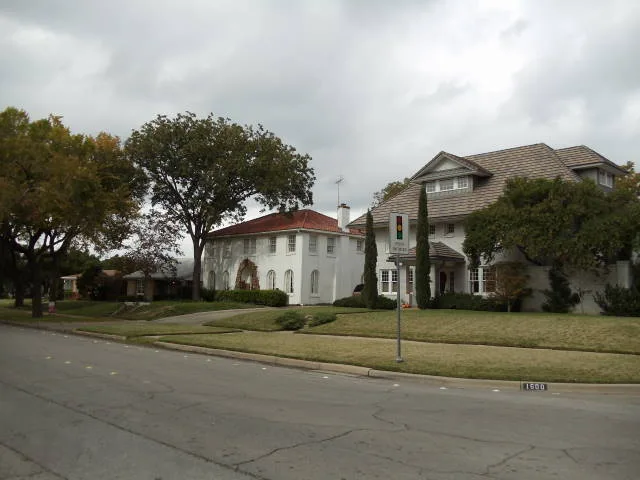
Elizabeth Boulevard is a 26-acre residential district about three miles southwest of downtown Fort Worth. It holds 44 single-family houses, 35 of them contributing, set on generous lots with standard 60-foot setbacks, shaded planting and utilities placed in the rear alleys. Developer John C. Ryan, Sr. laid it out in 1911 as the first restricted residential subdivision in the city and the first to use landscape architects and a master plan with entrance gates. The first house went up in 1911, and building peaked around 1919-1920 after oil was discovered in West Texas. Construction of expensive homes continued until the 1929 stock market crash. Residents included oilmen, bankers, lawyers and physicians. Their houses show Classical, Spanish Colonial, Mission and Georgian Revival styles, along with local versions of Prairie School design. Nine one-story houses from the 1950s are non-contributing. Most houses remain little altered, and preservation work is active.
Machine-generated summary. This summary was generated by a language model from the official nomination document and has not been reviewed line by line by an editor. It may contain errors. Check the source document before relying on any detail. Source: nomination document (PDF) · catalog entry. Generated October 2026 (model claude-sonnet-5-5, prompt v1.0-2026-10-29).
| Period of significance | 1911-1929 |
|---|---|
| Styles | Eclectic and revival styles (Classical, Spanish Colonial, Mission, Georgian Revival) with vernacular Prairie School |
| Areas of significance | Landscape Architecture, Commerce, Architecture |
| Acreage | 26 |
| Boundary source | NPS cultural-resource GIS polygon |
| Full listing page | Elizabeth Boulevard Historic District (property record) |
What listing means for this property
This is a historic district. Buildings within its boundary are either contributing (they add to the district's significance) or non-contributing. Owners of contributing income-producing buildings can claim the 20% federal rehabilitation tax credit; homeowners should look at state credits. National Register districts impose no design review by themselves; a local historic district ordinance, if one exists, does (the difference explained).
General information, not legal or tax advice. Rules change; confirm with your State Historic Preservation Office or a qualified adviser.