Eighth Avenue Historic District

Why it's listed
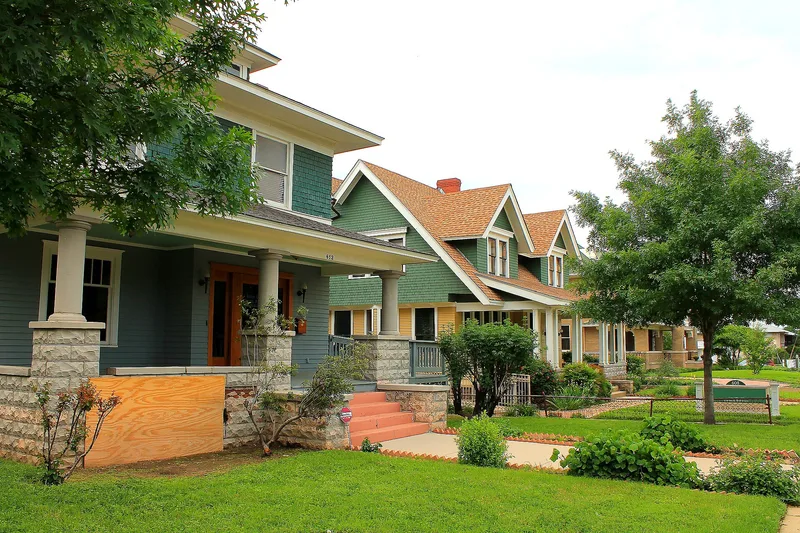
This one-block district on Fort Worth's Near South Side holds five houses built between about 1907 and 1909, four of which contribute to its character. It sits on Block 3 of the Edwards Heirs Addition, about two blocks south of Interstate 30, in an area once known as Quality Hill. Most of the grander homes nearby have been demolished as the neighboring medical district grew, leaving this block as the most intact residential group in the area. The houses are more modest than those that once lined 8th, Summit and Pennsylvania avenues, but they reflect housing popular with the city's business and professional classes. Prairie School, Arts and Crafts and Colonial Revival influences appear in the designs. The brick house at 600 8th Avenue was designed by the Fort Worth firm Sanguinet and Staats. Porch alterations at 608 8th Avenue in 1920 set the end of the period of significance. Most of the houses now serve commercial uses.
Machine-generated summary. This summary was generated by a language model from the official nomination document and has not been reviewed line by line by an editor. It may contain errors. Check the source document before relying on any detail. Source: nomination document (PDF) · catalog entry. Generated October 2026 (model claude-sonnet-5-5, prompt v1.0-2026-10-29).
| Period of significance | c. 1907-1920 |
|---|---|
| Styles | Late 19th and 20th Century American Movements: Prairie School, Bungalow/Craftsman; Late 19th and 20th Century Revivals: Dutch Colonial Revival |
| Areas of significance | Architecture |
| Acreage | 1.2 |
| Boundary source | NPS cultural-resource GIS polygon |
| Full listing page | Eighth Avenue Historic District (property record) |
What listing means for this property
This is a historic district. Buildings within its boundary are either contributing (they add to the district's significance) or non-contributing. Owners of contributing income-producing buildings can claim the 20% federal rehabilitation tax credit; homeowners should look at state credits. National Register districts impose no design review by themselves; a local historic district ordinance, if one exists, does (the difference explained).
General information, not legal or tax advice. Rules change; confirm with your State Historic Preservation Office or a qualified adviser.