East Main Street Historic District

The National Park Service has not published a boundary polygon for this district; the map shows the listed properties inside it and the district's reference point.
Why it's listed
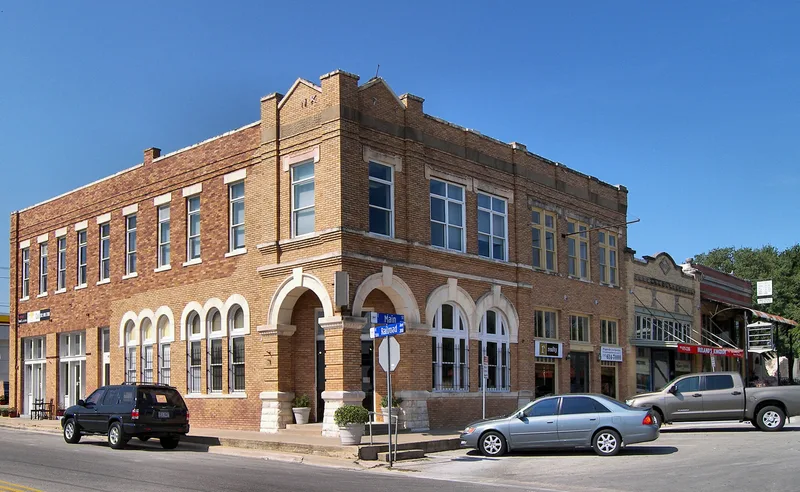
Four brick commercial buildings at 111 to 117 East Main Street form the historic core of Pflugerville, a Texas town northeast of Austin. Built between 1909 and about 1912, they sit on narrow lots from the 1904 town plat laid out beside the Missouri-Kansas-Texas Railroad. The group includes a two-story former Farmers State Bank with arched limestone entrances, a two-story former hardware store, a single-story pharmacy with a curved Mission-style parapet, and a tall single-story mercantile that once served as a grocery and post office. Their facades mix brick, limestone and cast stone detailing drawing on Italian Renaissance and Mission Revival ideas. The district was recognized because the railroad turned a scattered farming community into a trading town, and these buildings are the best surviving evidence of that growth after fires destroyed other landmarks. Today they house a restaurant, bakery, gift shop and other businesses, and retain much of their original interior and exterior fabric.
Machine-generated summary. This summary was generated by a language model from the official nomination document and has not been reviewed line by line by an editor. It may contain errors. Check the source document before relying on any detail. Source: nomination document (PDF) · catalog entry. Generated October 2026 (model claude-sonnet-5-5, prompt v1.0-2026-10-29).
| Period of significance | 1909-1912 |
|---|---|
| Styles | Late Victorian: Italianate; Other: 1-part commercial block |
| Areas of significance | Architecture, Community Planning and Development |
| Acreage | 0.9 |
| Boundary source | not published |
| Full listing page | East Main Street Historic District (property record) |
What listing means for this property
This is a historic district. Buildings within its boundary are either contributing (they add to the district's significance) or non-contributing. Owners of contributing income-producing buildings can claim the 20% federal rehabilitation tax credit; homeowners should look at state credits. National Register districts impose no design review by themselves; a local historic district ordinance, if one exists, does (the difference explained).
General information, not legal or tax advice. Rules change; confirm with your State Historic Preservation Office or a qualified adviser.