Eagle Lake Commercial Historic District

Why it's listed
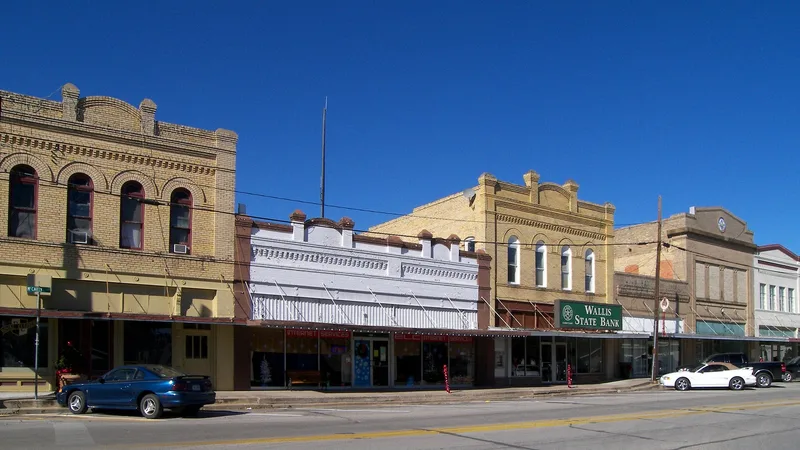
Downtown Eagle Lake, Texas, is a ten-block commercial district centered on Main Street and the public square, about halfway between Austin and Houston. Its 39 buildings are mostly one- and two-story attached brick commercial blocks, with corbelled parapets, arched windows, dentil bands and some cast-iron storefront columns. Many date from 1903-04 and from 1911-13, and there are later additions such as the 1926 Italian Renaissance revival Old City Hall, a 1938 service station, and a 1958 bank. The district grew because three railroad lines met just east of town, and the Southern Pacific Depot, the only wooden building left, recalls that role. Several larger buildings, including the Hughs buildings, the Masonic Lodge and the Baring-Hughs Building, show Beaux Arts symmetry and Italian Renaissance detail. The district was recognized locally for its commerce, community development and architecture, and for keeping the look of an early twentieth-century rural Texas business center. Thirty-five of its 39 resources contribute to that character.
Machine-generated summary. This summary was generated by a language model from the official nomination document and has not been reviewed line by line by an editor. It may contain errors. Check the source document before relying on any detail. Source: nomination document (PDF) · catalog entry. Generated October 2026 (model claude-sonnet-5-5, prompt v1.0-2026-10-29).
| Period of significance | 1903-1958 |
|---|---|
| Styles | Late 19th and 20th Century Revivals: Italian Renaissance; Commercial Style; Mission; Beaux Arts influences; Post-War Modern |
| Areas of significance | Commerce, Community Planning and Development, Architecture |
| Acreage | 16 |
| Boundary source | NPS cultural-resource GIS polygon |
| Full listing page | Eagle Lake Commercial Historic District (property record) |
What listing means for this property
This is a historic district. Buildings within its boundary are either contributing (they add to the district's significance) or non-contributing. Owners of contributing income-producing buildings can claim the 20% federal rehabilitation tax credit; homeowners should look at state credits. National Register districts impose no design review by themselves; a local historic district ordinance, if one exists, does (the difference explained).
General information, not legal or tax advice. Rules change; confirm with your State Historic Preservation Office or a qualified adviser.