Durazno Plantation

Why it's listed
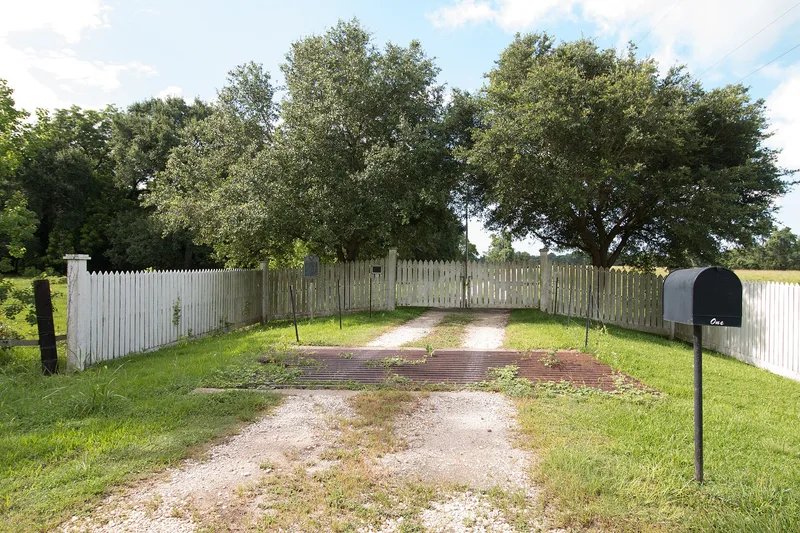
Durazno Plantation occupies about 129 acres south of Jones Creek in Brazoria County, Texas. The land was part of a 1828 Mexican grant to Stephen F. Austin, who hoped to settle there with Mary Austin Holley. His nephew, William Joel Bryan, settled the property in 1840 and developed it into a cotton, cattle and sugar-producing center that became a hub for the extended Austin, Bryan and Perry families. The present main house dates from 1909 and was built around earlier structures, including a plantation office and a log kitchen still hidden within its walls. Other features include a brick gatepost and cistern, a log carriage house, a syrup kettle, and a relocated c. 1900 Carpenter Gothic church. Chimney ruins mark a row of about twelve slave cabins, and an unmarked slave cemetery lies northwest of the house. The property was listed for its historical associations, surviving fabric and potential to yield archeological information about Texas Gulf Coast plantation life.
Machine-generated summary. This summary was generated by a language model from the official nomination document and has not been reviewed line by line by an editor. It may contain errors. Check the source document before relying on any detail. Source: nomination document (PDF) · catalog entry. Generated October 2026 (model claude-sonnet-5-5, prompt v1.0-2026-10-29).
| Period of significance | 1800-1899, 1900- (specific dates 1828, 1840s, 1909) |
|---|---|
| Areas of significance | Historic - Non-Aboriginal, Exploration/Settlement, Politics/Government, Architecture |
| Acreage | 129 |
| Boundary source | NPS cultural-resource GIS polygon |
| Full listing page | Durazno Plantation (property record) |
What listing means for this property
This is a historic district. Buildings within its boundary are either contributing (they add to the district's significance) or non-contributing. Owners of contributing income-producing buildings can claim the 20% federal rehabilitation tax credit; homeowners should look at state credits. National Register districts impose no design review by themselves; a local historic district ordinance, if one exists, does (the difference explained).
General information, not legal or tax advice. Rules change; confirm with your State Historic Preservation Office or a qualified adviser.