Downtown Buda Historic District

Why it's listed
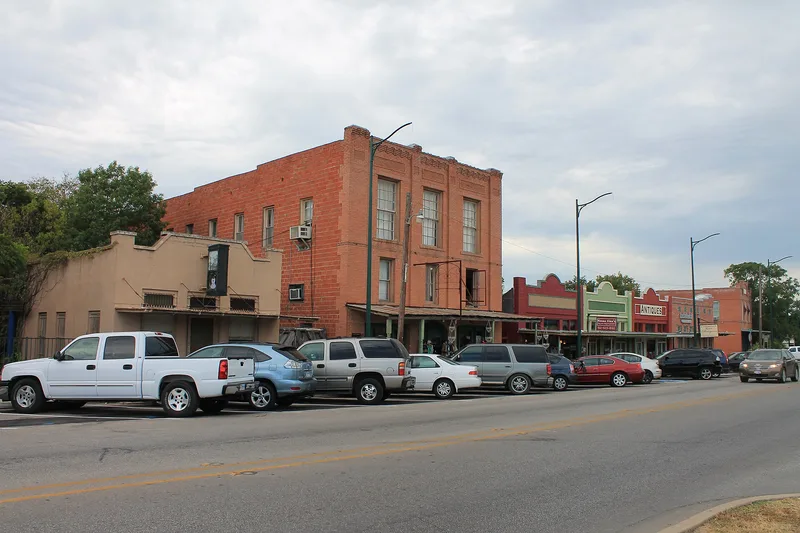
Buda's downtown is a six-block commercial strip on the west side of the railroad tracks, about 13 miles south of Austin. The town was founded in 1881 when the railroad arrived, and Main Street has served as its commercial center ever since. The district holds 37 resources, 28 of them contributing, including one- and two-part brick and limestone stores built from the late 1890s to the mid-1920s, plus several frame houses, garages and outbuildings. Among the highlights are the 1898 limestone store on Main Street, built with local Buda limestone, and rows of attached commercial buildings in Blocks 2, 3 and 4. Buda never grew as large as its founders hoped, but its cotton-based farm economy supported steady building through the 1920s, when drought, flooding and boll weevils hurt the crop. The district is described as a representative example of a Texas railroad town, with consistent building height, massing, setback and street orientation that preserve a strong sense of place.
Machine-generated summary. This summary was generated by a language model from the official nomination document and has not been reviewed line by line by an editor. It may contain errors. Check the source document before relying on any detail. Source: nomination document (PDF) · catalog entry. Generated October 2026 (model claude-sonnet-5-5, prompt v1.0-2026-10-29).
| Styles | Commercial Style, Bungalow/Craftsman, Classical Revival, Ranch Style |
|---|---|
| Areas of significance | Community Planning and Development, Architecture |
| Acreage | 15 |
| Boundary source | NPS cultural-resource GIS polygon |
| Full listing page | Downtown Buda Historic District (property record) |
What listing means for this property
This is a historic district. Buildings within its boundary are either contributing (they add to the district's significance) or non-contributing. Owners of contributing income-producing buildings can claim the 20% federal rehabilitation tax credit; homeowners should look at state credits. National Register districts impose no design review by themselves; a local historic district ordinance, if one exists, does (the difference explained).
General information, not legal or tax advice. Rules change; confirm with your State Historic Preservation Office or a qualified adviser.