Comfort Historic District (Boundary Increase)

Why it's listed
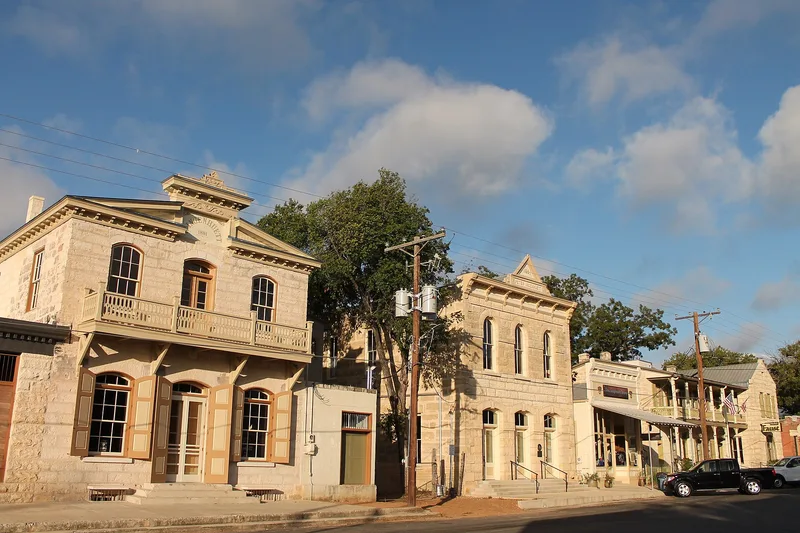
This listing enlarges the Comfort Historic District in Kendall County, Texas, a town founded by German immigrants in 1854. The original 1979 district covered ten core blocks. The amendment adds areas on all four sides and extends the period of significance to 1954, so that buildings from the 1930s through the early 1950s can count. The added area has 174 properties, including houses, a feed mill, a hatchery, a beer garden, a Turnverein, churches, two Mexican-American-owned groceries and the historic school campus. Early buildings used local cypress and limestone in log, fachwerk and board-and-batten construction. Later houses include Queen Anne, Folk Victorian L-plans, Craftsman bungalows and postwar Ranch and Minimal Traditional types. The district is considered locally significant for community development and architecture. It shows how an unincorporated town stayed stable, grew as an agricultural trade center and kept a low-density, largely intact historic character despite Highway 27 and the former rail line cutting through its grid.
Machine-generated summary. This summary was generated by a language model from the official nomination document and has not been reviewed line by line by an editor. It may contain errors. Check the source document before relying on any detail. Source: nomination document (PDF) · catalog entry. Generated October 2026 (model claude-sonnet-5-5, prompt v1.0-2026-10-29).
| Period of significance | 1854-1954 |
|---|---|
| Styles | Late Victorian (Queen Anne, Folk Victorian), Craftsman, Ranch, Moderne, Spanish Eclectic, Tudor, Minimal Traditional; vernacular L-plan and commercial block forms |
| Areas of significance | Community Planning and Development, Architecture |
| Acreage | 192.5 |
| Boundary source | NPS cultural-resource GIS polygon |
| Full listing page | Comfort Historic District (Boundary Increase) (property record) |
What listing means for this property
This is a historic district. Buildings within its boundary are either contributing (they add to the district's significance) or non-contributing. Owners of contributing income-producing buildings can claim the 20% federal rehabilitation tax credit; homeowners should look at state credits. National Register districts impose no design review by themselves; a local historic district ordinance, if one exists, does (the difference explained).
General information, not legal or tax advice. Rules change; confirm with your State Historic Preservation Office or a qualified adviser.