Central Handley Historic District

Why it's listed
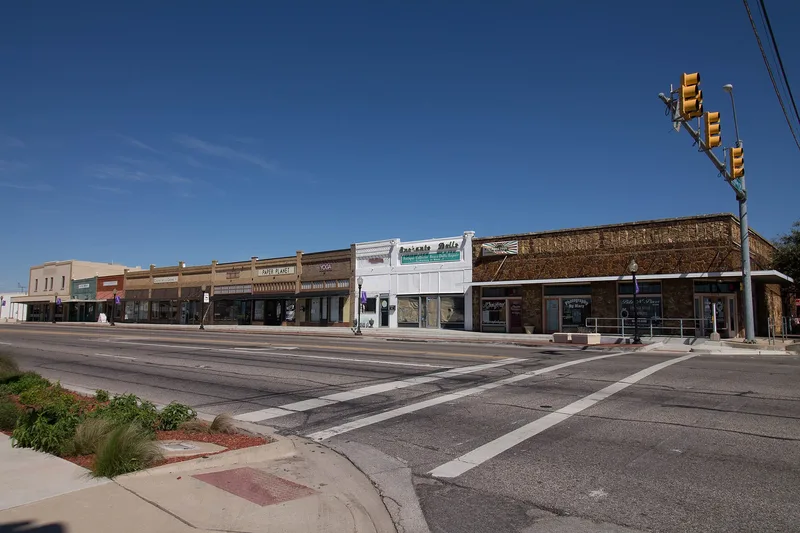
Handley was platted by the Texas and Pacific Railway in 1885, and this district preserves its commercial core, about seven miles east of downtown Fort Worth. Most of the 12 resources are 1-story Commercial Style brick storefronts built between about 1910 and 1933 along the north side of East Lancaster Avenue, originally Front Street. Their widths follow the original 25-foot lots, and the buildings sit close to the street on two-tiered curbs. The district also includes a 1924 metal-sided feed store, a Folk Victorian house and a 1930s drug store built of sandstone and petrified wood. Businesses here included groceries, drug stores, a bank, a theater, dry cleaners and post offices. Ten buildings contribute to the district's character, while two are counted as noncontributing because of stucco and replaced windows. A 1989 survey called it the finest ensemble of commercial buildings in East Fort Worth from the heyday of the Interurban, and that assessment supports its listing.
Machine-generated summary. This summary was generated by a language model from the official nomination document and has not been reviewed line by line by an editor. It may contain errors. Check the source document before relying on any detail. Source: nomination document (PDF) · catalog entry. Generated October 2026 (model claude-sonnet-5-5, prompt v1.0-2026-10-29).
| Styles | Late 19th-Early 20th Century American Movements: Commercial Style; Later Victorian: Folk Victorian |
|---|---|
| Areas of significance | Commerce, Community Planning and Development, Architecture |
| Acreage | 3 |
| Boundary source | NPS cultural-resource GIS polygon |
| Full listing page | Central Handley Historic District (property record) |
What listing means for this property
This is a historic district. Buildings within its boundary are either contributing (they add to the district's significance) or non-contributing. Owners of contributing income-producing buildings can claim the 20% federal rehabilitation tax credit; homeowners should look at state credits. National Register districts impose no design review by themselves; a local historic district ordinance, if one exists, does (the difference explained).
General information, not legal or tax advice. Rules change; confirm with your State Historic Preservation Office or a qualified adviser.