Cedar Lawn Historic District

Why it's listed
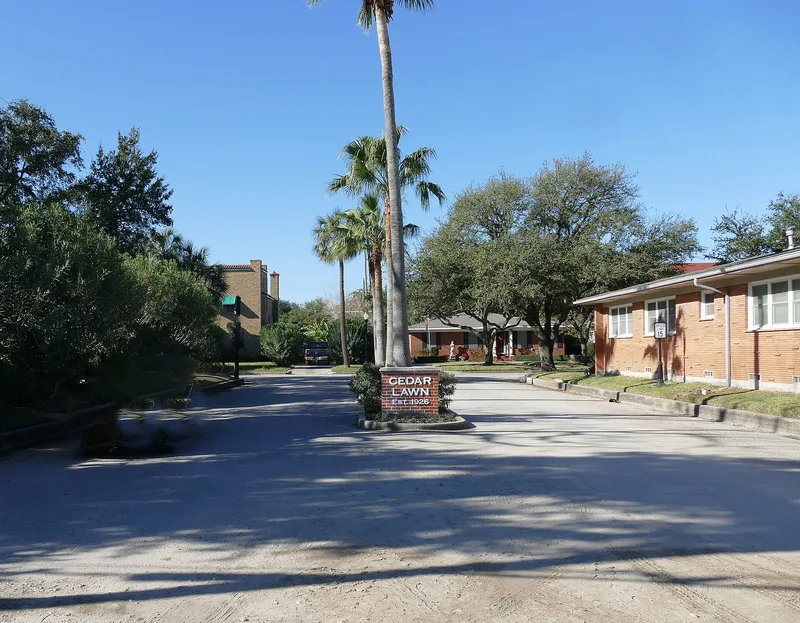
Cedar Lawn is a nine-block residential neighborhood in Galveston, Texas, about two miles west of downtown. The Cedar Lawn Company platted it in 1926 as an enclave for the Moody family and company officials. Its curving streets form a "butterfly" pattern that breaks from the city grid, and every house faces inward toward a round central garden. There are no sidewalks or traffic signs, and wide green lawns and mature oaks run up to the houses. The district holds 62 houses and 53 secondary buildings such as garages, built mostly between 1926 and 1957. Styles range from Tudor Revival, Spanish Eclectic and Georgian to Moderne, Ranch and Contemporary designs. Brick facades unify the mix, and the area has no commercial intrusion. It was listed for its role in early twentieth-century suburban planning and for its architecture. The record of building also tracks Galveston's 1920s prosperity, the Depression years, the pause during World War II and the postwar boom.
Machine-generated summary. This summary was generated by a language model from the official nomination document and has not been reviewed line by line by an editor. It may contain errors. Check the source document before relying on any detail. Source: nomination document (PDF) · catalog entry. Generated October 2026 (model claude-sonnet-5-5, prompt v1.0-2026-10-29).
| Period of significance | 1926-1957 |
|---|---|
| Styles | Late 19th and 20th Century Revivals (Spanish Eclectic, Italian Renaissance, French Eclectic, Colonial Revival, Tudor Revival, Neoclassical); Prairie School, Bungalow/Craftsman; Modern Movement (Contemporary, Ranch, Moderne) |
| Areas of significance | Architecture, Community Planning and Development |
| Acreage | 27 |
| Boundary source | NPS cultural-resource GIS polygon |
| Full listing page | Cedar Lawn Historic District (property record) |
What listing means for this property
This is a historic district. Buildings within its boundary are either contributing (they add to the district's significance) or non-contributing. Owners of contributing income-producing buildings can claim the 20% federal rehabilitation tax credit; homeowners should look at state credits. National Register districts impose no design review by themselves; a local historic district ordinance, if one exists, does (the difference explained).
General information, not legal or tax advice. Rules change; confirm with your State Historic Preservation Office or a qualified adviser.