Camp Ben McCulloch

Why it's listed
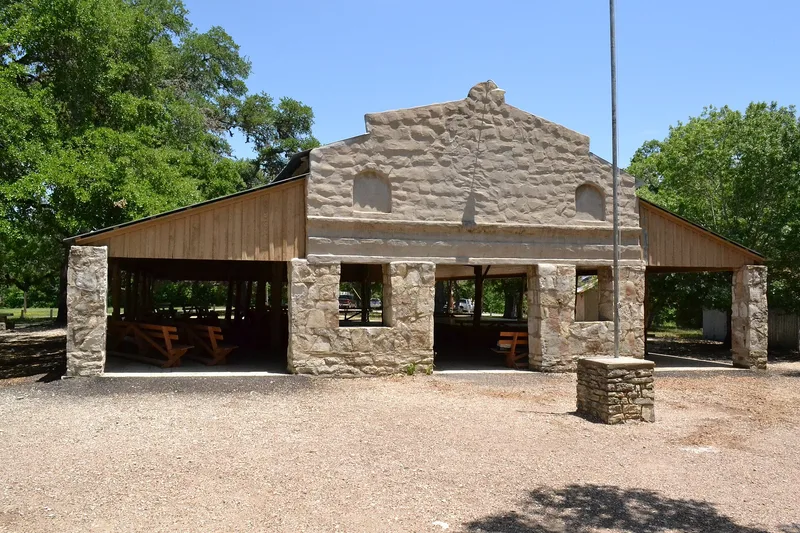
Camp Ben McCulloch is a 40-acre campground shaded by oaks along Onion Creek near Driftwood, in northwest Hays County. Hays County Confederate veterans organized in 1896, bought land for a permanent reunion ground in 1904, and have gathered there every year since, apart from 1918. The reunions grew into the county's major social event, open to the public and drawing more than 5,000 people in the early 1950s. The oldest building is an open-sided tabernacle from about 1904, remodeled by the Works Progress Administration in 1935 with an Alamo-style stone front. Other WPA work includes entrance pillars, roads, steps to the spring, shelters now used for storage and restrooms, and concrete picnic tables inscribed with the names of Confederate veterans. A concrete dance arena was added in the late 1940s, and a pavilion in 1989. The grounds and layout have changed little since the 1930s, and the camp is recognized for its role in recreation and social life in Central Texas.
Machine-generated summary. This summary was generated by a language model from the official nomination document and has not been reviewed line by line by an editor. It may contain errors. Check the source document before relying on any detail. Source: nomination document (PDF) · catalog entry. Generated October 2026 (model claude-sonnet-5-5, prompt v1.0-2026-10-29).
| Period of significance | 1903-1954 |
|---|---|
| Styles | Late 19th and 20th Century Revivals: Mission Revival; Other: WPA Rustic |
| Areas of significance | Entertainment/Recreation |
| Acreage | 37.5 |
| Boundary source | NPS cultural-resource GIS polygon |
| Full listing page | Camp Ben McCulloch (property record) |
What listing means for this property
This is a historic district. Buildings within its boundary are either contributing (they add to the district's significance) or non-contributing. Owners of contributing income-producing buildings can claim the 20% federal rehabilitation tax credit; homeowners should look at state credits. National Register districts impose no design review by themselves; a local historic district ordinance, if one exists, does (the difference explained).
General information, not legal or tax advice. Rules change; confirm with your State Historic Preservation Office or a qualified adviser.