Bungalow Colony Historic District

Why it's listed
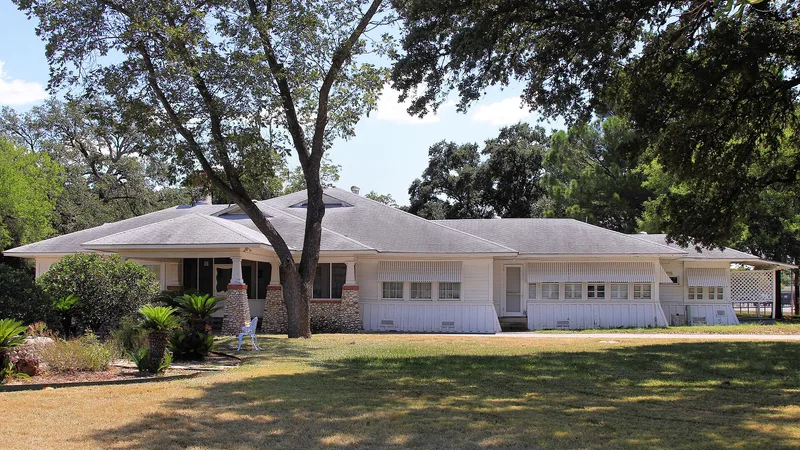
Bungalow Colony is a small neighborhood near the northeast edge of Kelly Air Force Base in San Antonio, Texas. Built between 1920 and 1945, it provided homes, offices and recreation space for senior officers and their families. The district contains 68 buildings, structures, objects and sites, of which 36 contribute to its character. Most are one-story wood-frame Bungalow houses with wide eaves, porches and clapboard or board-and-batten siding. Behind them stand servants' quarters, garages and storage sheds. A hollow-tile and stucco Water Pump House shows Art Moderne styling, with molded stucco stars on each facade. Formal gardens with fountains, mature trees, lawns and sidewalks give the area a character distinct from the larger, later buildings around it. The district was listed because it reflects the base's role in military aviation training, supply and maintenance between the wars and during World War II, and because it preserves well-executed Bungalow architecture.
Machine-generated summary. This summary was generated by a language model from the official nomination document and has not been reviewed line by line by an editor. It may contain errors. Check the source document before relying on any detail. Source: nomination document (PDF) · catalog entry. Generated October 2026 (model claude-sonnet-5-5, prompt v1.0-2026-10-29).
| Period of significance | 1920-1945 |
|---|---|
| Styles | Late 19th & Early 20th Century American Movement: Bungalow/Craftsman; Modern Movement: Art Moderne |
| Areas of significance | Military, Architecture |
| Acreage | 15.8 |
| Boundary source | NPS cultural-resource GIS polygon |
| Full listing page | Bungalow Colony Historic District (property record) |
What listing means for this property
This is a historic district. Buildings within its boundary are either contributing (they add to the district's significance) or non-contributing. Owners of contributing income-producing buildings can claim the 20% federal rehabilitation tax credit; homeowners should look at state credits. National Register districts impose no design review by themselves; a local historic district ordinance, if one exists, does (the difference explained).
General information, not legal or tax advice. Rules change; confirm with your State Historic Preservation Office or a qualified adviser.