Bryan-Peak Commercial Historic District

Why it's listed
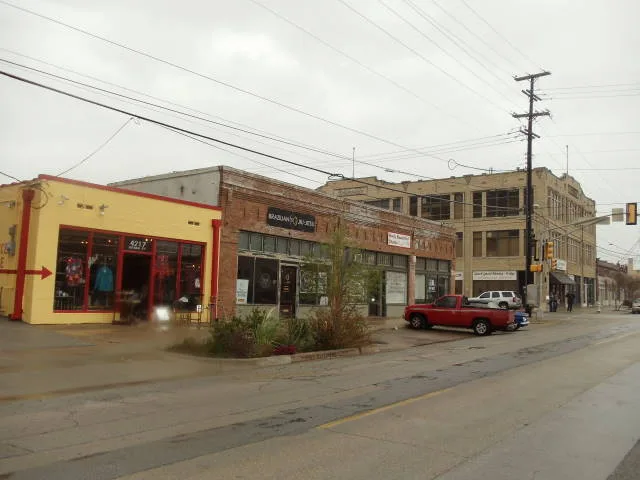
Brick storefronts cluster around the corner of Bryan and Peak streets in East Dallas, forming a small commercial district that grew with the city's streetcar network. The buildings are one to three stories tall, mostly built between about 1912 and 1925, and share party walls along wide concrete sidewalks. The three-story Brannon Building at 4301 Bryan is the tallest, while 4302-06 Bryan has the most ornate front, with an embattled parapet and geometric brick and cast-stone patterns. The corner became a business center after the Bryan Avenue line connected to the Interurban railway, whose first Dallas stop was here. Groceries, drugstores, a plumbing company, a barbershop and a post office followed, often with apartments above. The district is recognized as a rare surviving streetcar-era commercial node and for its modest vernacular and eclectic commercial block architecture. Eleven buildings contribute to its character; one later building does not.
Machine-generated summary. This summary was generated by a language model from the official nomination document and has not been reviewed line by line by an editor. It may contain errors. Check the source document before relying on any detail. Source: nomination document (PDF) · catalog entry. Generated October 2026 (model claude-sonnet-5-5, prompt v1.0-2026-10-29).
| Period of significance | 1912-1930 |
|---|---|
| Styles | Other: 1-part and 2-part commercial block (vernacular and eclectic) |
| Areas of significance | Commerce, Architecture |
| Acreage | 5 |
| Boundary source | NPS cultural-resource GIS polygon |
| Full listing page | Bryan-Peak Commercial Historic District (property record) |
What listing means for this property
This is a historic district. Buildings within its boundary are either contributing (they add to the district's significance) or non-contributing. Owners of contributing income-producing buildings can claim the 20% federal rehabilitation tax credit; homeowners should look at state credits. National Register districts impose no design review by themselves; a local historic district ordinance, if one exists, does (the difference explained).
General information, not legal or tax advice. Rules change; confirm with your State Historic Preservation Office or a qualified adviser.