Blanco Historic District

Why it's listed
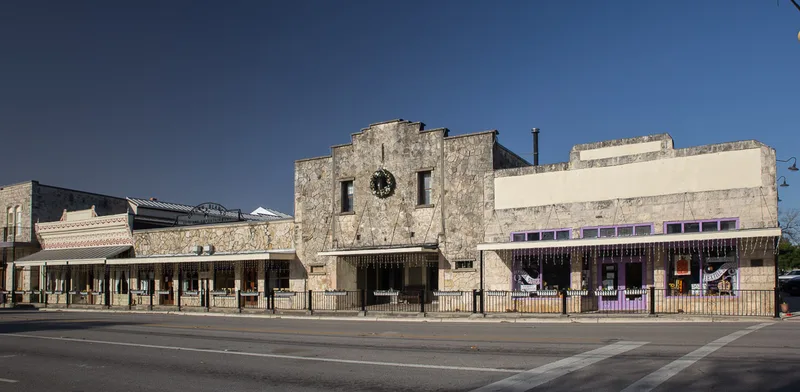
Blanco's historic core spreads across roughly eight blocks around the courthouse square, north of Town Creek in the Texas Hill Country. Forty-six properties make up the district, of which 25 date to 1941 or earlier and retain their character. The centerpiece is the Old Blanco County Courthouse, a two-story Second Empire building of native limestone completed in 1886. It served as the county seat for only four years before voters moved the seat to Johnson City, after which it held a school, bank, offices, medical facilities and other uses. Around it stand mostly one-story commercial buildings, such as the rough limestone Cage Building of 1908 and the Masonic Building of 1907, along with brick buildings of the 1920s and 1930s, houses, a jail, and wool and mohair warehouses tied to the local agricultural economy. Native limestone, used from the 1860s to the 1940s, gives the district visual unity, while later concrete block and cedar-sided buildings interrupt it in places.
Machine-generated summary. This summary was generated by a language model from the official nomination document and has not been reviewed line by line by an editor. It may contain errors. Check the source document before relying on any detail. Source: nomination document (PDF) · catalog entry. Generated October 2026 (model claude-sonnet-5-5, prompt v1.0-2026-10-29).
| Styles | Late Victorian: Second Empire; Late 19th and 20th Century Revival |
|---|---|
| Areas of significance | Commerce, Architecture |
| Acreage | 20 |
| Boundary source | NPS cultural-resource GIS polygon |
| Full listing page | Blanco Historic District (property record) |
What listing means for this property
This is a historic district. Buildings within its boundary are either contributing (they add to the district's significance) or non-contributing. Owners of contributing income-producing buildings can claim the 20% federal rehabilitation tax credit; homeowners should look at state credits. National Register districts impose no design review by themselves; a local historic district ordinance, if one exists, does (the difference explained).
General information, not legal or tax advice. Rules change; confirm with your State Historic Preservation Office or a qualified adviser.