Bastrop State Park

Why it's listed
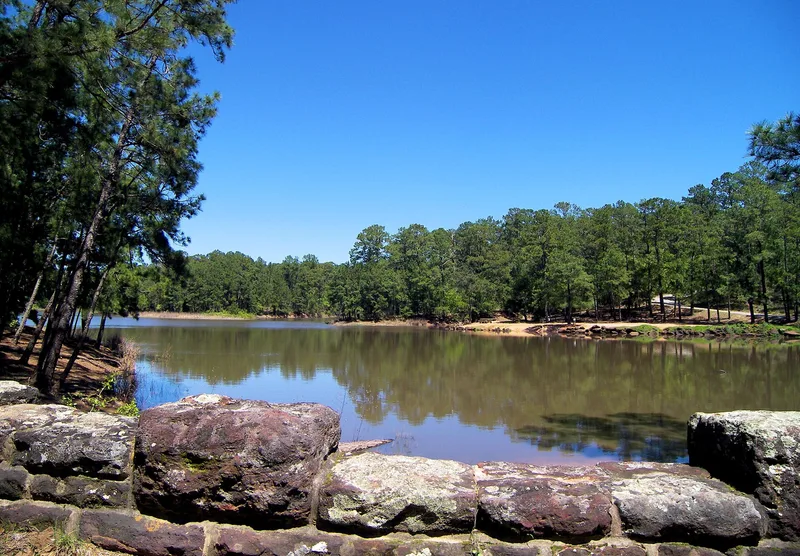
Bastrop State Park is a 2,054-acre historic district just east of Bastrop, Texas, set within the isolated Lost Pines forest. Planning began in 1933 as an early Civilian Conservation Corps project, partly on land earlier used as a private resort. Most facilities were built by CCC recruits, while the swimming pool and golf course were Works Progress Administration projects. The park has a single controlled entrance with a sandstone gatehouse, a loop drive with scenic overlooks, trails, a large refectory, a bathhouse and pool group, a nine-hole golf course, and a group of lakeshore tourist cabins. Roughly worked local sandstone, heavy timbers and peeled logs give the buildings a unified 'NPS Rustic' character, with more refined masonry near the entrance and rougher work in remote areas. Design was overseen by Herbert Maier, and the park became a showcase and model for CCC state parks. It retains excellent integrity to its original New Deal development.
Machine-generated summary. This summary was generated by a language model from the official nomination document and has not been reviewed line by line by an editor. It may contain errors. Check the source document before relying on any detail. Source: nomination document (PDF) · catalog entry. Generated October 2026 (model claude-sonnet-5-5, prompt v1.0-2026-10-29).
| Styles | Bungalow/Craftsman; NPS Rustic |
|---|---|
| Areas of significance | Landscape Architecture, Architecture, Conservation, Politics/Government, Community Planning and Development |
| Acreage | 2054 |
| Boundary source | NPS cultural-resource GIS polygon |
| Full listing page | Bastrop State Park (property record) |
What listing means for this property
This is a historic district. Buildings within its boundary are either contributing (they add to the district's significance) or non-contributing. Owners of contributing income-producing buildings can claim the 20% federal rehabilitation tax credit; homeowners should look at state credits. National Register districts impose no design review by themselves; a local historic district ordinance, if one exists, does (the difference explained).
General information, not legal or tax advice. Rules change; confirm with your State Historic Preservation Office or a qualified adviser.