Bartlett Commercial Historic District

Why it's listed
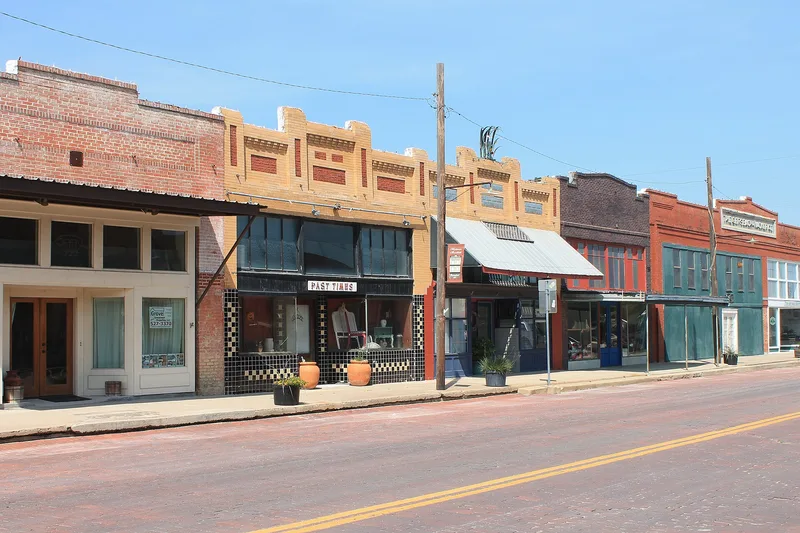
Bartlett's commercial core is a two-block stretch of brick storefronts along East Clark Street, with a short extension along Evie Street. Of 34 buildings, 30 contribute to the district and four are compatible. Most are one-story red brick structures from the early 1900s, with several from the 1920s built after a 1925 fire. A common design features three bays, a central entrance, large display windows, transoms and a decorated brick parapet. The Old Bartlett National Bank stands out for its Beaux-Arts Classicism, including plaster eagles, brick pilasters with Ionic capitals and a brick cornice. The red brick paving of East Clark also contributes to the setting. The district reflects the town's growth after a railroad line arrived in 1882 and cotton farming made Bartlett a regional shipping center. Many buildings have altered storefronts, and several stand vacant or deteriorated, but their upper facades remain largely intact. The Walton Building, built in 1903, has been rehabilitated.
Machine-generated summary. This summary was generated by a language model from the official nomination document and has not been reviewed line by line by an editor. It may contain errors. Check the source document before relying on any detail. Source: nomination document (PDF) · catalog entry. Generated October 2026 (model claude-sonnet-5-5, prompt v1.0-2026-10-29).
| Period of significance | 1900- |
|---|---|
| Styles | Texas vernacular early 20th century commercial architecture; Beaux-Arts Classicism (Old Bartlett National Bank) |
| Areas of significance | Architecture |
| Acreage | 8 |
| Boundary source | NPS cultural-resource GIS polygon |
| Full listing page | Bartlett Commercial Historic District (property record) |
What listing means for this property
This is a historic district. Buildings within its boundary are either contributing (they add to the district's significance) or non-contributing. Owners of contributing income-producing buildings can claim the 20% federal rehabilitation tax credit; homeowners should look at state credits. National Register districts impose no design review by themselves; a local historic district ordinance, if one exists, does (the difference explained).
General information, not legal or tax advice. Rules change; confirm with your State Historic Preservation Office or a qualified adviser.