Austin and Northwestern Railroad Historic District-Fairland to Llano

Why it's listed
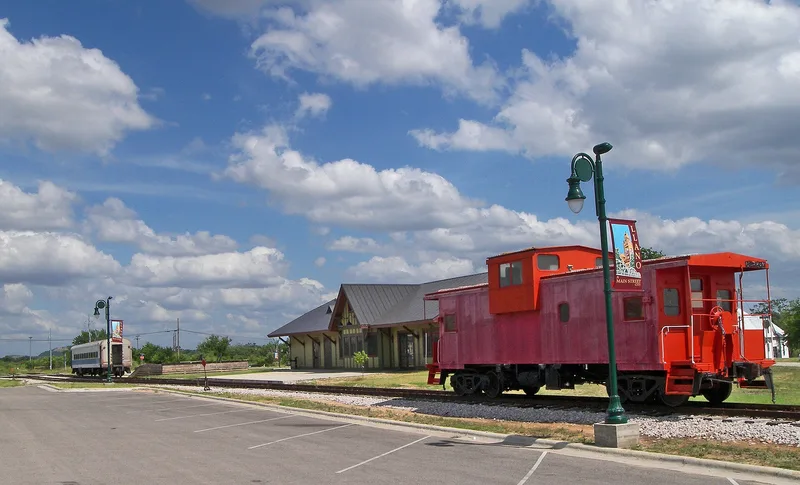
A 29.9-mile stretch of railroad in the Texas Hill Country, running from Fairland through Kingsland to Llano, forms this historic district. The Austin & Northwestern Railroad built the branchline in 1891-92 on standard-gauge track, following the Llano River to keep grades gentle. Its resources include wooden open-deck trestles from the original construction, steel truss bridges moved from older Southern Pacific installations around 1930, stone piers of native granite, and turning wyes at Fairland and Llano. At Kingsland, the Southern Pacific built the two-story Antlers Hotel in 1901 to encourage tourism and house section crews, along with annexes, cabins and utility structures. Llano retains a freight depot loading platform and the site of the depot that burned in 1961. Concrete trestles and a rebuilt Colorado River bridge from the 1960s are counted as noncontributing. The line has seen little change since the 1930s and is described as having very high integrity, with 50 of 59 resources contributing.
Machine-generated summary. This summary was generated by a language model from the official nomination document and has not been reviewed line by line by an editor. It may contain errors. Check the source document before relying on any detail. Source: nomination document (PDF) · catalog entry. Generated October 2026 (model claude-sonnet-5-5, prompt v1.0-2026-10-29).
| Styles | No Style |
|---|---|
| Areas of significance | Architecture, Engineering, Transportation |
| Acreage | 380 |
| Boundary source | NPS cultural-resource GIS polygon |
| Full listing page | Austin and Northwestern Railroad Historic District-Fairland to Llano (property record) |
What listing means for this property
This is a historic district. Buildings within its boundary are either contributing (they add to the district's significance) or non-contributing. Owners of contributing income-producing buildings can claim the 20% federal rehabilitation tax credit; homeowners should look at state credits. National Register districts impose no design review by themselves; a local historic district ordinance, if one exists, does (the difference explained).
General information, not legal or tax advice. Rules change; confirm with your State Historic Preservation Office or a qualified adviser.