Anderson Historic District

Why it's listed
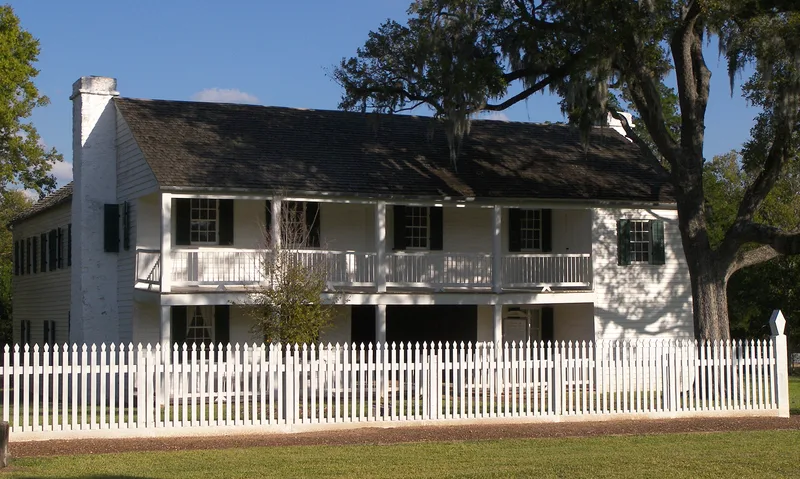
Anderson, in Grimes County, Texas, is a small courthouse town that grew from the earlier mercantile settlement of Alta Mira. Henry Fanthorp built his log inn there in 1834, and the town was laid out in 1846 when Grimes County was formed. It was named for K.L. Anderson, vice president of the Republic of Texas, who died at the inn. Surviving buildings include the 1891 brick courthouse, the expanded Fanthorp Inn, the Greek Revival Baptist Church of 1853-55, and a cluster of Palladian-style houses, one built for signer of the Texas Declaration of Independence Dr. B.B. Goodrich. The courthouse square is described as Welsh in design, with streets meeting at the courthouse. Anderson prospered as a stage-line crossroads and trade center until the railroad reached Navasota in the late 1850s. Economic decline afterward left its appearance largely unchanged since about 1900, which is why the district was recognized for its architecture, commerce and early Texas community history.
Machine-generated summary. This summary was generated by a language model from the official nomination document and has not been reviewed line by line by an editor. It may contain errors. Check the source document before relying on any detail. Source: nomination document (PDF) · catalog entry. Generated October 2026 (model claude-sonnet-5-5, prompt v1.0-2026-10-29).
| Period of significance | 19th Century |
|---|---|
| Styles | Mixed: Edwardian-Victorian courthouse, Greek Revival church, Palladian residences, log inn |
| Areas of significance | Commerce, Architecture, Social History |
| Acreage | 2200 |
| Boundary source | NPS cultural-resource GIS polygon |
| Full listing page | Anderson Historic District (property record) |
What listing means for this property
This is a historic district. Buildings within its boundary are either contributing (they add to the district's significance) or non-contributing. Owners of contributing income-producing buildings can claim the 20% federal rehabilitation tax credit; homeowners should look at state credits. National Register districts impose no design review by themselves; a local historic district ordinance, if one exists, does (the difference explained).
General information, not legal or tax advice. Rules change; confirm with your State Historic Preservation Office or a qualified adviser.