Wyncote Historic District

Why it's listed
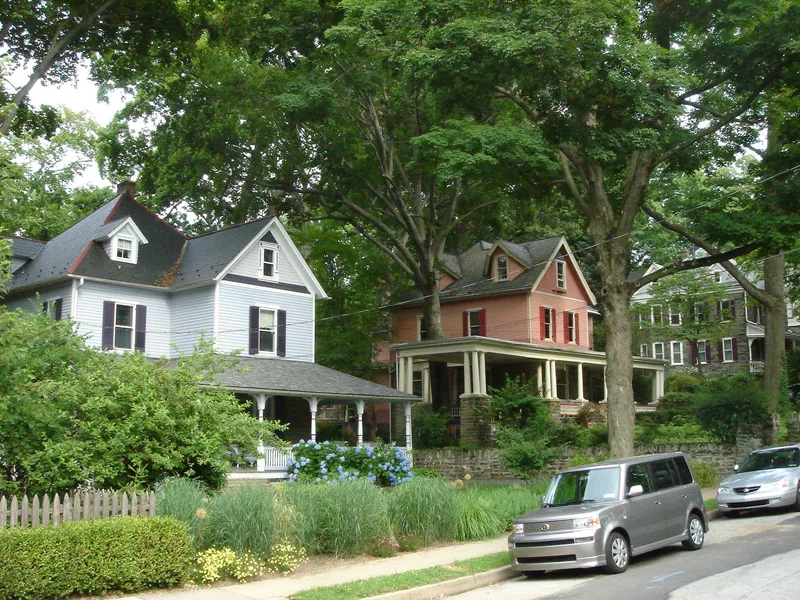
Wyncote is a residential district of about 108 acres in Cheltenham Township, roughly ten miles north of central Philadelphia, built mostly between 1865 and 1934. Most of its roughly 178 contributing buildings are two and a half story stone and wood houses set back from tree-lined streets, many in the Queen Anne style. Development began in 1885 on farmland that had been acquired by wealthy Philadelphians after the North Pennsylvania Railroad reached the area in 1855. Several separate developers, including Bradley Redfield, Henry K. Walt and Edward Tyson, laid out small sections of the district. Deed requirements for minimum building costs and lot sizes, together with an improvement association, kept it an exclusive suburb. Many houses were designed by prominent Philadelphia architects such as Horace Trumbauer, Furness and Evans, and Heacock and Hokanson. The district is also notable for All Hallows Episcopal Church, built in 1898 in English Gothic style. Its houses are regarded as a significant collection of late Victorian suburban architecture.
Machine-generated summary. This summary was generated by a language model from the official nomination document and has not been reviewed line by line by an editor. It may contain errors. Check the source document before relying on any detail. Source: nomination document (PDF) · catalog entry. Generated October 2026 (model claude-haiku-5-5, prompt v1.1-2026-10-29).
| Period of significance | 1865-1934 |
|---|---|
| Styles | Queen Anne, Tudor Revival, Colonial Revival, Shingle, Second Empire, Arts and Crafts, English Gothic |
| Areas of significance | Community Planning and Development, Architecture |
| Acreage | 108 |
| Boundary source | NPS cultural-resource GIS polygon |
| Full listing page | Wyncote Historic District (property record) |
What listing means for this property
This is a historic district. Buildings within its boundary are either contributing (they add to the district's significance) or non-contributing. Owners of contributing income-producing buildings can claim the 20% federal rehabilitation tax credit; homeowners should look at state credits. National Register districts impose no design review by themselves; a local historic district ordinance, if one exists, does (the difference explained).
General information, not legal or tax advice. Rules change; confirm with your State Historic Preservation Office or a qualified adviser.