Wycombe Village Historic District

Why it's listed
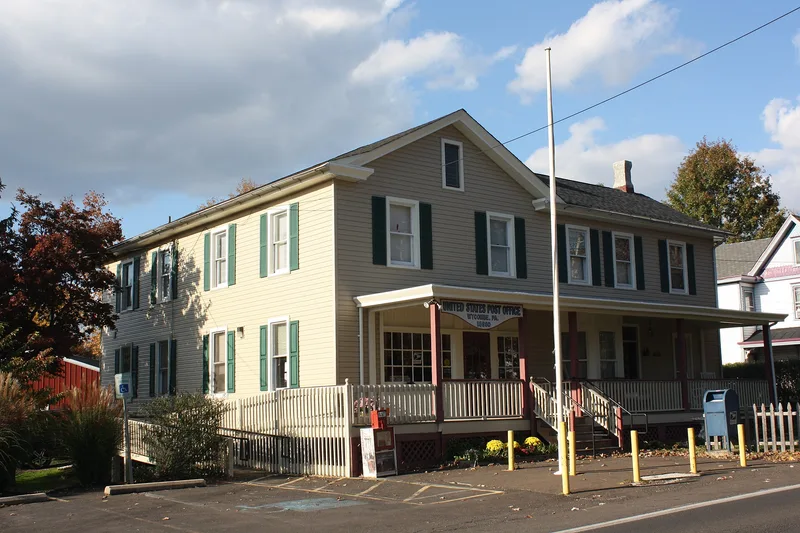
Wycombe is a village of about sixty-two major buildings on roughly sixty-three acres beside Mill Creek, on the Buckingham and Wrightstown Township line in Bucks County. Most of its buildings were erected between 1891 and 1915, after the Northeast Pennsylvania Railroad opened a station called Walton Station in 1891 and a Newtown to Doylestown trolley line crossed the creek nearby. The railroad transformed a mill hamlet founded around a grist mill dating to 1743 into a service village with shops, a hotel, a coal and lumber yard, a town hall and a feed mill completed in 1927. Its homes are mostly two-and-one-half story frame houses on wooded lots, blending Queen Anne and Victorian Gothic forms with emerging Foursquare and Colonial Revival details. Oscar Martin, a Doylestown architect, designed several notable buildings, including the stone-arch bridge, the Wycombe Schoolhouse and brick houses for local clients. The village is regarded as one of the most intact turn-of-the-century railroad villages in the county.
Machine-generated summary. This summary was generated by a language model from the official nomination document and has not been reviewed line by line by an editor. It may contain errors. Check the source document before relying on any detail. Source: nomination document (PDF) · catalog entry. Generated October 2026 (model claude-haiku-5-5, prompt v1.1-2026-10-29).
| Period of significance | 1891-1915 |
|---|---|
| Styles | Vernacular Queen Anne and Bungalow, with Colonial Revival, Victorian Gothic and American Foursquare influences |
| Areas of significance | Community Planning and Development, Transportation, Architecture |
| Acreage | 63 |
| Boundary source | NPS cultural-resource GIS polygon |
| Full listing page | Wycombe Village Historic District (property record) |
What listing means for this property
This is a historic district. Buildings within its boundary are either contributing (they add to the district's significance) or non-contributing. Owners of contributing income-producing buildings can claim the 20% federal rehabilitation tax credit; homeowners should look at state credits. National Register districts impose no design review by themselves; a local historic district ordinance, if one exists, does (the difference explained).
General information, not legal or tax advice. Rules change; confirm with your State Historic Preservation Office or a qualified adviser.