Worlds End State Park Family Cabin District

Why it's listed
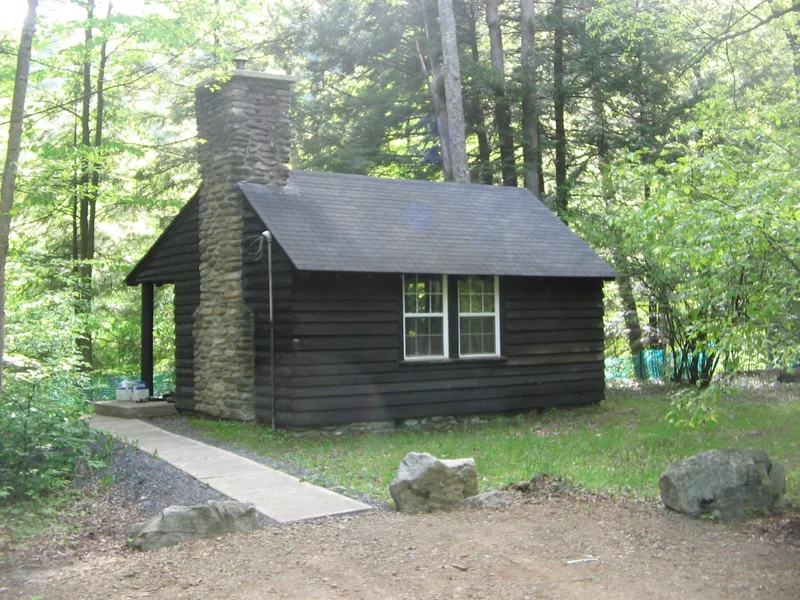
Twenty-five cabins and latrines make up this district in Worlds End State Park, set in a narrow, S-shaped valley of Loyalsock Creek about two miles southeast of Forksville in Sullivan County. Civilian Conservation Corps Camp S-95 built the cabins between 1933 and 1941, and the park opened to the public in 1936. The buildings use local materials: square and rectangular log cabins with corner posts and white cement chinking, gable-roofed cabins with wane-edged siding, and stone chimneys, fireplaces, piers and porch walls. Several plans recur, including three-room T-plan and L-plan cabins with inset porches. The district is regarded as an example of the rustic style promoted by the National Park Service, with buildings placed to blend into their surroundings. Its importance lies in the Depression-era federal relief program that employed young men, and in the state and federal cooperation behind it. The district was accepted for its architectural and historical value, and it has served as recreational lodging for roughly fifty years.
Machine-generated summary. This summary was generated by a language model from the official nomination document and has not been reviewed line by line by an editor. It may contain errors. Check the source document before relying on any detail. Source: nomination document (PDF) · catalog entry. Generated October 2026 (model claude-haiku-5-5, prompt v1.1-2026-10-29).
| Period of significance | 1933-1941 |
|---|---|
| Styles | Rustic |
| Areas of significance | Landscape Architecture, Conservation, Entertainment/Recreation, Politics/Government, Architecture, Social History |
| Acreage | 18.4 |
| Boundary source | NPS cultural-resource GIS polygon |
| Full listing page | Worlds End State Park Family Cabin District (property record) |
What listing means for this property
This is a historic district. Buildings within its boundary are either contributing (they add to the district's significance) or non-contributing. Owners of contributing income-producing buildings can claim the 20% federal rehabilitation tax credit; homeowners should look at state credits. National Register districts impose no design review by themselves; a local historic district ordinance, if one exists, does (the difference explained).
General information, not legal or tax advice. Rules change; confirm with your State Historic Preservation Office or a qualified adviser.