Windber Historic District
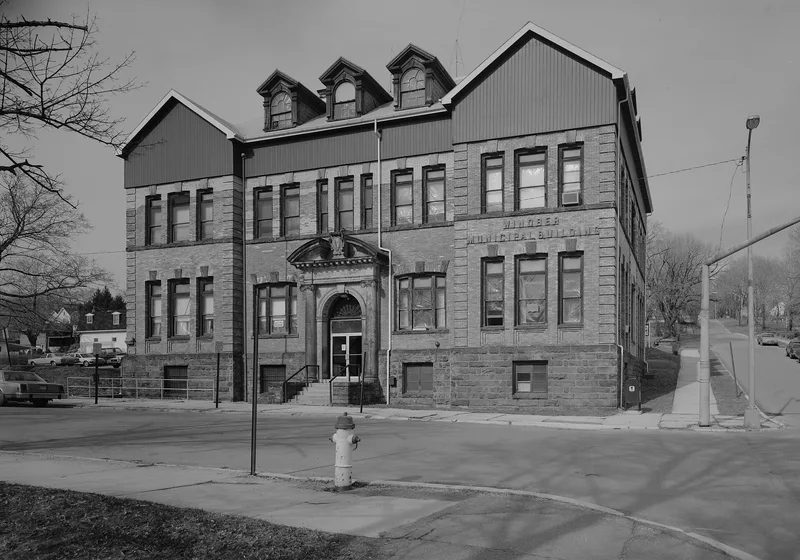

Why it's listed
Windber is a planned coal company town in the narrow Paint Creek valley of Somerset County, Pennsylvania, laid out by the Berwind-White Coal Mining Company in 1897 and built out largely by 1930. The district holds 945 contributing resources, including worker housing of frame construction with weatherboard siding, a hillside enclave of management houses in Queen Anne and Colonial Revival styles, and a central business district on Graham Avenue. Notable commercial buildings include the Colonial Revival company headquarters completed in 1903, the Classical Revival Windber Trust Building of 1910, and the Eureka Department Store. Its significance rests on the way the layout and housing expressed company control over workers, and on its contrast with the surrounding patch towns. Immigrant communities organized around churches and fraternal groups, and strikes in 1906 and 1922 are documented as part of the town's labor history.
Machine-generated summary. This summary was generated by a language model from the official nomination document and has not been reviewed line by line by an editor. It may contain errors. Check the source document before relying on any detail. Source: nomination document (PDF) · catalog entry. Generated October 2026 (model claude-haiku-5-5, prompt v1.1-2026-10-29).
| Period of significance | 1897-1940 |
|---|---|
| Styles | Late Victorian: Queen Anne; Late 19th & 20th Century Revivals: Colonial Revival |
| Areas of significance | Industry, Community Planning and Development, European, Architecture, Social History |
| Acreage | 299 |
| Boundary source | NPS cultural-resource GIS polygon |
| Full listing page | Windber Historic District (property record) |
What listing means for this property
This is a historic district. Buildings within its boundary are either contributing (they add to the district's significance) or non-contributing. Owners of contributing income-producing buildings can claim the 20% federal rehabilitation tax credit; homeowners should look at state credits. National Register districts impose no design review by themselves; a local historic district ordinance, if one exists, does (the difference explained).
General information, not legal or tax advice. Rules change; confirm with your State Historic Preservation Office or a qualified adviser.