Whitsett Historic District

Why it's listed
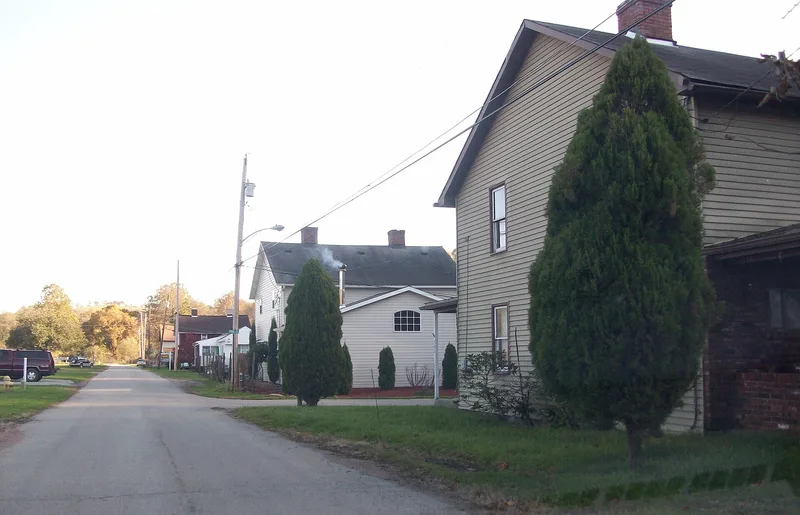
Whitsett is a company-built bituminous coal mining community on the Youghiogheny River in northern Perry Township, Fayette County, about a mile north of Perryopolis. Most of its houses were built between 1891 and 1917 by the Pittsburgh Coal Company and its predecessors, and the district includes managers' and workers' duplexes laid out in uniform rows, mine entrance remains, a tipple foundation, a slate dump, and beehive coke ovens. The town was planned on an orthogonal grid, and its surviving plan and house stock are regarded as a typical example of a mining community of the period. Its residents included Eastern European immigrants, many recruited by company agents, and African American miners who came from the south. In 1925 the company adopted an open shop policy that gave African American miners access to skilled mine jobs for the first time. Banning No. 2 mine closed in 1944, and the community is now primarily residential.
Machine-generated summary. This summary was generated by a language model from the official nomination document and has not been reviewed line by line by an editor. It may contain errors. Check the source document before relying on any detail. Source: nomination document (PDF) · catalog entry. Generated October 2026 (model claude-haiku-5-5, prompt v1.1-2026-10-29).
| Period of significance | 1891-1944 |
|---|---|
| Styles | NO STYLE |
| Areas of significance | Architecture, Industry, European, Black, Community Planning and Development |
| Acreage | 79 |
| Boundary source | NPS cultural-resource GIS polygon |
| Full listing page | Whitsett Historic District (property record) |
What listing means for this property
This is a historic district. Buildings within its boundary are either contributing (they add to the district's significance) or non-contributing. Owners of contributing income-producing buildings can claim the 20% federal rehabilitation tax credit; homeowners should look at state credits. National Register districts impose no design review by themselves; a local historic district ordinance, if one exists, does (the difference explained).
General information, not legal or tax advice. Rules change; confirm with your State Historic Preservation Office or a qualified adviser.