West Norristown Historic District

Why it's listed
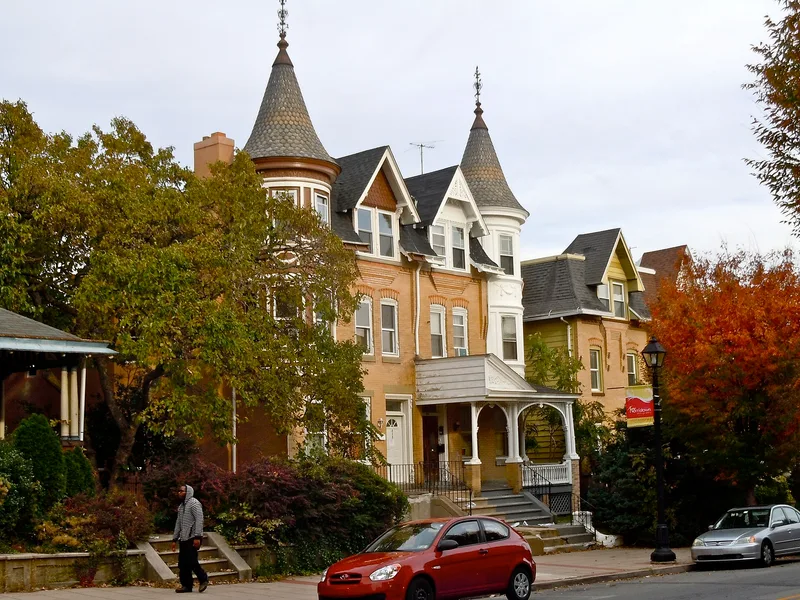
Rows of brick rowhouses and semi-detached twins make up most of this Norristown neighborhood, laid out on a grid that climbs westward from Stoney Creek and developed between the 1850s and the early 1900s. Speculative builders filled the blocks with three-story brick rows, most notably on Astor, Chain, George and Kohn Streets, and the houses display a sequence of Victorian styles that changes block by block as one moves up the hill. West Main Street, once the fashionable address, holds large towered semi-detached houses and mansions, including the Romanesque Wentz House of 1895. West Marshall Street served as the neighborhood's commercial center, anchored by the 1876 Western Market Hall. Surviving mills and factories along Stoney Creek, such as the Quaker City Shirt Works and the Norristown Grain Binder Works, record the area's early industry. Its concentration of intact housing and related buildings is what the nomination regards as its main distinction.
Machine-generated summary. This summary was generated by a language model from the official nomination document and has not been reviewed line by line by an editor. It may contain errors. Check the source document before relying on any detail. Source: nomination document (PDF) · catalog entry. Generated October 2026 (model claude-haiku-5-5, prompt v1.1-2026-10-29).
| Period of significance | 1850-1920 |
|---|---|
| Styles | Victorian styles including Second Empire, High Victorian Gothic, Queen Anne, Romanesque, Georgian Revival and Arts and Crafts |
| Areas of significance | Commerce, Engineering, Architecture |
| Acreage | 220 |
| Boundary source | NPS cultural-resource GIS polygon |
| Full listing page | West Norristown Historic District (property record) |
What listing means for this property
This is a historic district. Buildings within its boundary are either contributing (they add to the district's significance) or non-contributing. Owners of contributing income-producing buildings can claim the 20% federal rehabilitation tax credit; homeowners should look at state credits. National Register districts impose no design review by themselves; a local historic district ordinance, if one exists, does (the difference explained).
General information, not legal or tax advice. Rules change; confirm with your State Historic Preservation Office or a qualified adviser.