West Middletown Historic District

Why it's listed
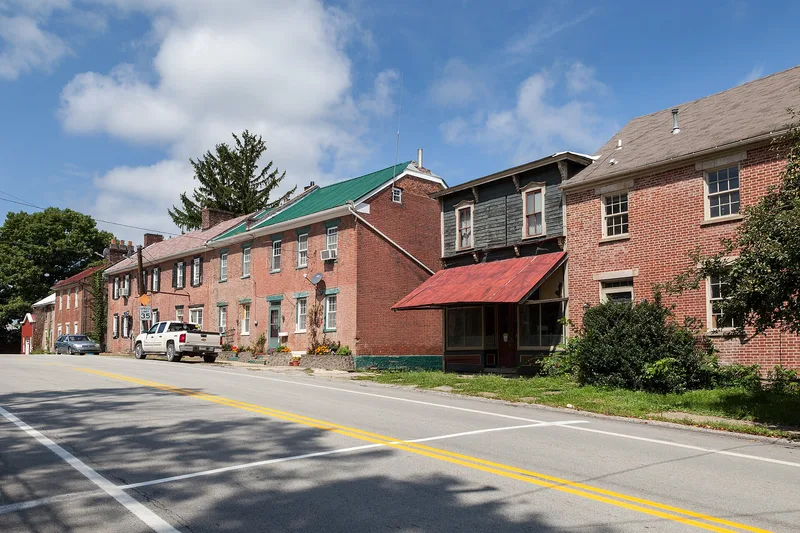
West Middletown is a small rural commercial community along a high ridge in Washington County, Pennsylvania, with its earliest known building dating to 1798. Its 49 buildings, most built between about 1800 and 1900, are set close to the sidewalk on long, narrow lots. Most are plain vernacular frame or brick structures that served as combined homes and businesses, many with two entrances, one for the trade and one for private quarters. The district also keeps nineteenth-century details such as sandstone curbs, flagstone sidewalks, hand-cut stone gutters, and stone upping-blocks. The community was a stopover between Washington, Pennsylvania and the Ohio River town of Wellsburg, West Virginia. The Ralston Thrasher was invented nearby and manufactured here until a June 1859 frost left large shipments unused and led to the company's bankruptcy. Its nineteenth-century character and integrity are the basis for its recognition.
Machine-generated summary. This summary was generated by a language model from the official nomination document and has not been reviewed line by line by an editor. It may contain errors. Check the source document before relying on any detail. Source: nomination document (PDF) · catalog entry. Generated October 2026 (model claude-haiku-5-5, prompt v1.1-2026-10-29).
| Period of significance | 1798-1900 |
|---|---|
| Styles | Vernacular; one Italianate home |
| Areas of significance | Commerce, European, Architecture |
| Acreage | 17.9 |
| Boundary source | NPS cultural-resource GIS polygon |
| Full listing page | West Middletown Historic District (property record) |
What listing means for this property
This is a historic district. Buildings within its boundary are either contributing (they add to the district's significance) or non-contributing. Owners of contributing income-producing buildings can claim the 20% federal rehabilitation tax credit; homeowners should look at state credits. National Register districts impose no design review by themselves; a local historic district ordinance, if one exists, does (the difference explained).
General information, not legal or tax advice. Rules change; confirm with your State Historic Preservation Office or a qualified adviser.