West Chester Boarding School for Boys

The National Park Service has not published a boundary polygon for this district; the map shows the listed properties inside it and the district's reference point.
Why it's listed
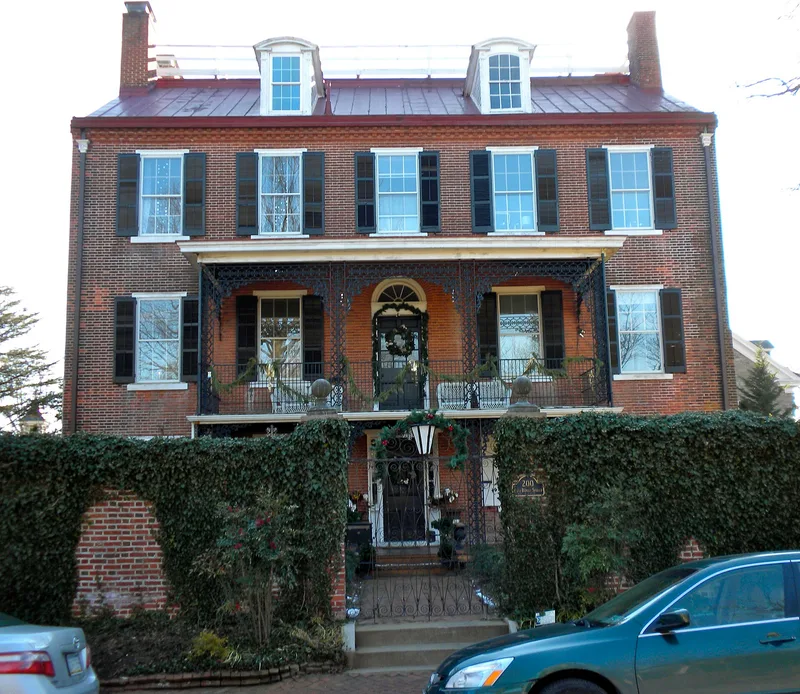
Brick, three-story building in West Chester, Chester County, built in 1836 by Nathan Sharpless as a private academy for boys. Founded by Joshua Hoopes, the school operated for twenty-eight years, accommodating up to fifty scholars per semester, with instruction that emphasized mathematics and the sciences. A day school for girls opened in the same building in 1855, and both schools closed in 1862. Early construction was financed by local leaders, including botanist and congressman William Darlington. The building keeps its Federal style, with a five-bay north elevation, bonnet dormers, a terne tin roof and a rooftop widow's walk. It is regarded as the only surviving structure in the borough built expressly for private education between 1830 and 1860, and it is significant for its educational history and its architecture.
Machine-generated summary. This summary was generated by a language model from the official nomination document and has not been reviewed line by line by an editor. It may contain errors. Check the source document before relying on any detail. Source: nomination document (PDF) · catalog entry. Generated October 2026 (model claude-haiku-5-5, prompt v1.1-2026-10-29).
| Period of significance | 1836-62 |
|---|---|
| Styles | Federal |
| Areas of significance | Education, Architecture |
| Acreage | 0.4 |
| Boundary source | not published |
| Full listing page | West Chester Boarding School for Boys (property record) |
What listing means for this property
This is a historic district. Buildings within its boundary are either contributing (they add to the district's significance) or non-contributing. Owners of contributing income-producing buildings can claim the 20% federal rehabilitation tax credit; homeowners should look at state credits. National Register districts impose no design review by themselves; a local historic district ordinance, if one exists, does (the difference explained).
General information, not legal or tax advice. Rules change; confirm with your State Historic Preservation Office or a qualified adviser.