Warwick Furnace/Farms

Why it's listed
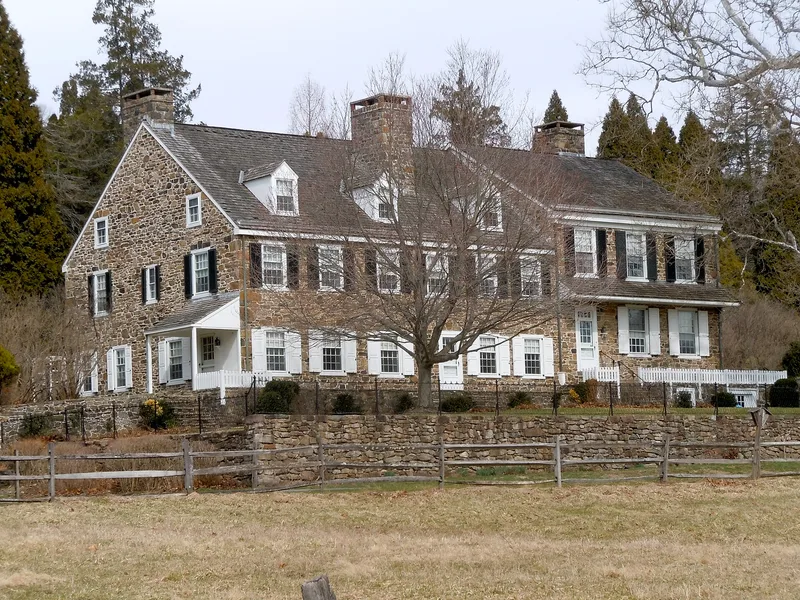
Built in the 1730s on land patented to the Nutt family, the Warwick Furnace complex in Chester County grew around an iron furnace completed in 1738 and a manor house of random fieldstone with corner quoins. Under Robert Grace the works produced Franklin stoves, and during the Revolution the furnace was designated an official arsenal, producing cannon in 1776. George Washington's army came to Warwick after the Battle of Brandywine in 1777. Through the nineteenth century the property was increasingly run as a farm, and its owners experimented with fertilizers and lime to restore soil fertility. The furnace ruins, tenant houses, springhouse, log cabin and stone barns still stand, showing how an eighteenth-century ironmaster's estate was organized. The property has stayed in one family line for about two centuries, which the nomination considers unusual and important for understanding the region's early industrial history in the French and Pickering Creek watersheds.
Machine-generated summary. This summary was generated by a language model from the official nomination document and has not been reviewed line by line by an editor. It may contain errors. Check the source document before relying on any detail. Source: nomination document (PDF) · catalog entry. Generated October 2026 (model claude-haiku-5-5, prompt v1.1-2026-10-29).
| Period of significance | 1738-1860 |
|---|---|
| Styles | Dutch Colonial, Italienate |
| Areas of significance | Industry, Agriculture, Architecture |
| Acreage | 786.4 |
| Boundary source | NPS cultural-resource GIS polygon |
| Full listing page | Warwick Furnace/Farms (property record) |
What listing means for this property
This is a historic district. Buildings within its boundary are either contributing (they add to the district's significance) or non-contributing. Owners of contributing income-producing buildings can claim the 20% federal rehabilitation tax credit; homeowners should look at state credits. National Register districts impose no design review by themselves; a local historic district ordinance, if one exists, does (the difference explained).
General information, not legal or tax advice. Rules change; confirm with your State Historic Preservation Office or a qualified adviser.