Warrior Ridge Dam and Hydroelectric Plant

Why it's listed
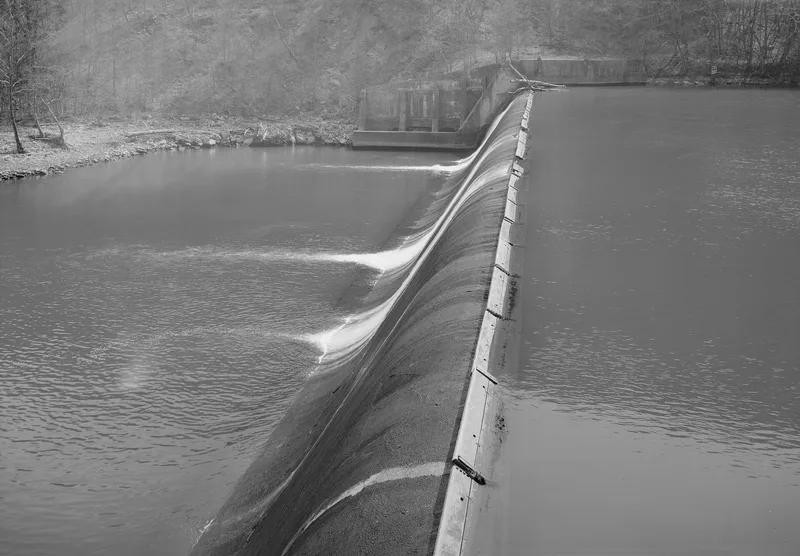
Warrior Ridge Dam and hydroelectric plant sits in a gap between two ridges of the Allegheny Mountains on the Frankstown Branch of the Juniata River, Huntingdon County. The main dam, a 400-foot reinforced concrete hollow dam about 27 feet high, was completed in 1905-07 for the Juniata Hydro-Electric Company of Philadelphia, with an auxiliary dam of similar design built in 1907. Ambursen Hydraulic Construction Company designed and built the dam, using a buttressed hollow-core form it had patented in 1904. William H. Cushman, the company's chief engineer, designed the power house. The plant had a rated capacity of 8000 horsepower and supplied power to Huntingdon, Altoona and Tyrone. The nomination treats the dam as an early prototype of its type and the complex, including four company houses built in 1907 for operators, as an intact example of an industrial facility and its community. A major part of the powerhouse was demolished in 1978.
Machine-generated summary. This summary was generated by a language model from the official nomination document and has not been reviewed line by line by an editor. It may contain errors. Check the source document before relying on any detail. Source: nomination document (PDF) · catalog entry. Generated October 2026 (model claude-haiku-5-5, prompt v1.1-2026-10-29).
| Period of significance | 1905-1939 |
|---|---|
| Areas of significance | Engineering, Industry |
| Acreage | 8 |
| Boundary source | NPS cultural-resource GIS polygon |
| Full listing page | Warrior Ridge Dam and Hydroelectric Plant (property record) |
What listing means for this property
This is a historic district. Buildings within its boundary are either contributing (they add to the district's significance) or non-contributing. Owners of contributing income-producing buildings can claim the 20% federal rehabilitation tax credit; homeowners should look at state credits. National Register districts impose no design review by themselves; a local historic district ordinance, if one exists, does (the difference explained).
General information, not legal or tax advice. Rules change; confirm with your State Historic Preservation Office or a qualified adviser.