Village of Edgewood Historic District

Why it's listed
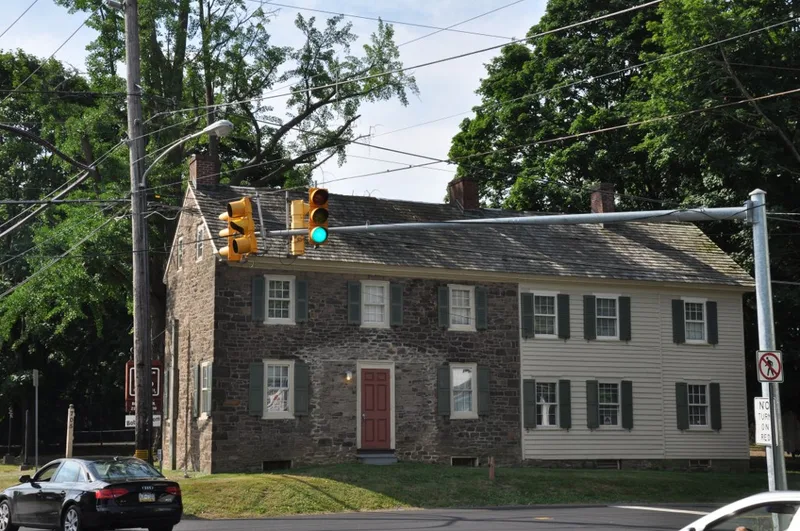
Edgewood is a rural village where Yardley-Langhorne and Stony Hill Roads meet, in the fields beyond the coastal plain fall line in Lower Makefield Township, Bucks County. The village grew from a crossroads settlement first called Biles Corner after Dr. William Biles, who built a home and practice there. Its twenty-eight structures range from 18th-century fieldstone houses, including Biles' House and Tomlinson's Store, to Victorian frame dwellings and a 1921 masonry grange hall. The Miller house, known as Old Shade, is cited for its Adamesque doorway and is described as a fine example of federal architecture. Edgewood was the center of a farming economy that supplied Morrisville and Philadelphia, and it had blacksmiths, wheelwrights and a shoemaker. Its tenant houses and surviving barns record how family farms were worked by manual labor. The village also served as a summer resort and as a meeting place for the Edgewood and Middletown Granges.
Machine-generated summary. This summary was generated by a language model from the official nomination document and has not been reviewed line by line by an editor. It may contain errors. Check the source document before relying on any detail. Source: nomination document (PDF) · catalog entry. Generated October 2026 (model claude-haiku-5-5, prompt v1.1-2026-10-29).
| Period of significance | 1700-1899 |
|---|---|
| Styles | Colonial, federal, Victorian and mid-19th century frame farm tenant and craftsman's houses |
| Areas of significance | Agriculture, Architecture |
| Acreage | 33.7 |
| Boundary source | NPS cultural-resource GIS polygon |
| Full listing page | Village of Edgewood Historic District (property record) |
What listing means for this property
This is a historic district. Buildings within its boundary are either contributing (they add to the district's significance) or non-contributing. Owners of contributing income-producing buildings can claim the 20% federal rehabilitation tax credit; homeowners should look at state credits. National Register districts impose no design review by themselves; a local historic district ordinance, if one exists, does (the difference explained).
General information, not legal or tax advice. Rules change; confirm with your State Historic Preservation Office or a qualified adviser.