Van Kirk Farm

Why it's listed
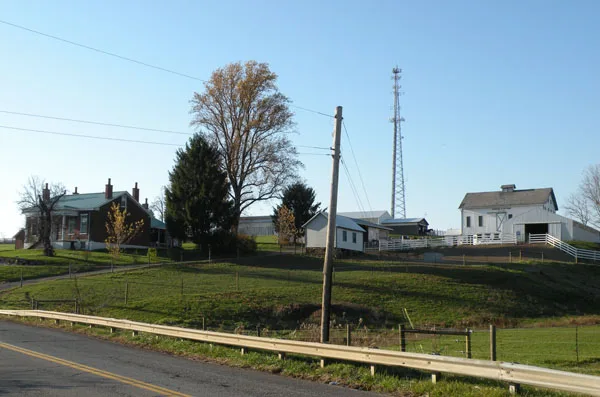
Set on rising ground in rural Elizabeth Township, the Van Kirk Farm is a working dairy farm centered on a red brick Greek Revival farmhouse dated to about 1840. The house has a center-hall plan, six-over-six windows and a front portico with four fluted Doric columns, and its interior woodwork, including door surrounds and mantels with attached pilasters, is largely intact. The farm also includes a two-story brick springhouse with brick ventilators, a board and batten house, a frame barn, and a one-room frame building thought to date to about 1875. Land here was owned by Joseph Van Kirk, who acquired 112 acres in 1813 and nearly 300 more by 1823. The farm is considered important because its farmhouse is the county's rare regional example of the style, and because its buildings and rural setting preserve a nineteenth century agricultural landscape that has largely disappeared from Allegheny County.
Machine-generated summary. This summary was generated by a language model from the official nomination document and has not been reviewed line by line by an editor. It may contain errors. Check the source document before relying on any detail. Source: nomination document (PDF) · catalog entry. Generated October 2026 (model claude-haiku-5-5, prompt v1.1-2026-10-29).
| Period of significance | c. 1840 |
|---|---|
| Styles | Greek Revival |
| Areas of significance | Agriculture, Architecture |
| Acreage | 45 |
| Boundary source | NPS cultural-resource GIS polygon |
| Full listing page | Van Kirk Farm (property record) |
What listing means for this property
This is a historic district. Buildings within its boundary are either contributing (they add to the district's significance) or non-contributing. Owners of contributing income-producing buildings can claim the 20% federal rehabilitation tax credit; homeowners should look at state credits. National Register districts impose no design review by themselves; a local historic district ordinance, if one exists, does (the difference explained).
General information, not legal or tax advice. Rules change; confirm with your State Historic Preservation Office or a qualified adviser.